Posts tonen met het label campaign setting. Alle posts tonen

vrijdag 30 juli 2021

Greyhawk Facts: the Howling Emptiness of the Flanaess

 As has been eloquently been put forth before by, among others, Chris Kutalik of Hill Cantons fame and Joeseph Bloch the Greyhawk Grognard, the lands of the Flanaess are maddeningly uninhabited. As part of a series exploring the implied setting of AD&D 1st Edition, Kutalik wrote an enlightening blogpost on the empty land as presented in the Greyhawk Folio: 

"If you actually sit down take all the distances and stated populations at face value and start crunching numbers, your immediate impression will be that the lands of Flanaess aren't just stable, if embattled faux medieval nations, but far more like the edge-of-oblivion points of light societies of a post-apocalyptic world."

And further on:

"In other words, even the wildest places of Europe at the time are orders of magnitude more settled and prosperous than Veluna. Those wide light green clearings on the Darlene map turn out not to be dull vast tracts of farmland peopled by plump, happy yeoman, but barely held little bastions.

It's hard not to conjure up images of isolated little hamlets clustered around a grim watchtower or small castle with miles of wasteland and bramble-grown lost settlements filling the miles between. Even inside these “settled” lands armed-to-the-teeth patrols are making the rounds and a monster or two is not an uncommon daily nuisance."

At Greyhawk Grognard, Joe ties the emptiness of the land to the implied endgame of AD&D:

"In that game system, there are two tensions at work. The first is the need for the players to have room in which to expand to play the famed “end game” of AD&D; clearing land, building keeps and towers, and eventually attracting settlers and taxing them. This, I think, is the reason that most of the small villages that are portrayed in the game are shown outside of the normal feudal system of government; who was ruling over Hommlet before Burne and Rufus decided to set up their fortress? By having hexes that are mostly empty, there is plenty of space for players to set themselves up as described in the DMG.

The second, I believe, is the need of the DM to not be overwhelmed by needless detail. Why are Hommlet and Nulb the only villages in their respective 30-mile-across hexes?

Because from the standpoint of the DM, that’s where all the action is! If there were a historically-accurate density of villages and farms on those hexes, the player characters would be overwhelmed with choice. “Which village with an inn is the one that we should concentrate on? Let’s pick this one! I think the name’s neat!” That requires the DM to then have exacting detail on all those villages or be willing and able to make up such detail on the fly."

So there we have it, the Flanaess is a continent where civilization is confined to heavily armed camps, threatened by bandits, outlaws, humanoid hordes and monsters, providing player characters with opportunities to clear the wilderness and set up domains for themselves.


What does it all mean?

As an exercise, I took the From the Ashes material with which I am most familiar and building of Longetalos work in this thread on EN World, calculated the population density of the various states and principalities of the Flanaess. Only a few realms have a density of more than 1 person per square kilometer. In a vain effort to provide some insight, I photoshopped this map (not my best work). 

Some highlights:

  • Irongate and Dyvers are positively urbanized with 8.5 and 3.9 humans per square kilometer respectively. I never imagined Irongate as such a center of civilization. This certainly paints a new picture of Irongate as political, military and economic center of the Iron League. Dyvers, of course, is the old capital of the Viceroyalty of Ferrond and as can be derived, the Kingdom of Aerdy's main colony outside of the old Aerdy heartlands.
  • The most heavily populated lands are all east and directly south of the Nyr Dyv. The Great Kingdom (including Almor, Medegia and North and South Province) has a population density of 2.8 humans per square kilometer. Nyrond, the Duchy of Urnst and the lands of Greyhawk follow with a density of 1.8, 1.7 and 1.8 respectively. These settlement patterns are still extremely sparse (and not accounting for the numbers of demihumans, humanoids, roving bandits and leaderless armies traipsing around the wilderness), but they paint a band of relative cultivation on the southeastern Nyr Dyv.
  • Ekbir is a stronghold of cultivation in the Baklunish basin, and Veluna is more settled than Furyondy. This provokes an interesting idea, that Zeif (for the Baklunish) and Furyondy (in the western Nyr Dyv lands) are dependent on those two states for their wellbeing. Suddenly, the abduction of Thrommel to prevent a Veluna-Furyondy union makes even more sense, as Furyondy without support from the Theocracy would be weakened considerably economically speaking. One wonders what the dynamic between Ekbir and Zeif is.
  • Perrenland is a bastion of civilization in the northwestern Flanaess. One wonders what Iggwilv's contribution to this state of affairs was. Did she build Perrenland up to its current state? Or was Perrenland even more civilized before the reign of the Witch-Queen, on par with the Aerdy heartlands?
  • The Sheldomar Valley is the domain of scattered humans living in alliance with the native demihumans.
In play, this map provides a guideline on describing the lands of the Flanaess through which the PCs travel. It is also an interesting aid in chronicling the civilizing influence of the Great Kingdom. For all its current wickedness, the Overkings of yore have actually done a great job in kingdom-building, with great rival Keoland paling in comparison. 

For the campaign I am preparing, I am imagining the Flanaess as a wild land with bastions of order surrounded by a sea of chaos. The lands to the east are more cultivated than the wild west, and Flanaess society, economy and religion is still heavily influenced by the Aerdy powerhouse built by the Overkings. Within these points of light, heavy armor and steel weaponry is available. In the wilderness, a level of technology and organization akin to the European Dark Ages prevails. Travel is dangerous, with monsters, brigands and humanoids on the rise and prowling on trade routes and farmsteads alike. It is a land in need of adventurers to safely guide food, weapons and trade goods between the civilized lands, and to clear out the wilderness and establish new bastions of order.

woensdag 28 juli 2021

Greyhawk Facts: Humankind is fragmented and besieged

"Humankind is fragmented into isolationist realms, indifferent nations, evil lands and states striving for good. The Baklunish countries in the northwest have grown in power. Nomads, bandits and barbarians rais southward every spring and summer. Humanoid enclaves are strongly established and scattered throughout the continent, and wicked insanity rules in the Great Kingdom. The eventual result of all this cannot be foretold."

- excerpted from the A Guide to the World of Greyhawk Fantasy Setting, World of Greyhawk Boxed Set


As I am preparing for my next D&D campaign - which will be set in the World of Greyhawk - I am considering which materials I will use for that campagin. A common question in preparing for Greyhawk is "Which era will I set my campaign in, Gygax original, From the Ashes-reboot or Living Greyhawk-era?" My answer to that question will be: All of the above (and none).

Marvel, with the Marvel Cinematic Universe (and numerous cartoon adaptations before that, and even the Ultimate Marvel comic book imprint), and movies drawing from either modern or ancient myth do all the time, I will pull inspiration from the primary sources to create my own version of the setting - as Gary Gygax intended when he wrote the original Folio-edition in the first place. As part of this exercise, I will distill my vision of the Flanaess in a few "Things You Need To Know", or Greyhawk Facts, in a number of posts, each post detailing another fact. Today: the degeneration of civilization and the rise of savage humanoids.


Art by Jeff Easley

The Realm of Mankind is beset on all sides by savage enemies, and civilization's light is dying.

The World of Greyhawk is first and foremost a realm of Man. It was envisioned as a humanocentric setting by Gygax, further supported by the passage in the original DMG that D&D was envisioned as a humanocentric game. The Guide to the World of Greyhawk reinforces this fact by summing the human population of a particular state/land and only providing sketchy details on demihuman or humanoid populations. In the original publication, the Elven and Dwarven realms are considered to be fading. It is the Great Kingdom, a human-ruled power, that rose to dominate the Flanaess in recent centuries. Yet that same Great Kingdom has been in decline for the past few decades, being ruled by the aforementioned "wicked insanity".

Overall, the Flanaess is painted as a land of petty human kingdoms and principalities, striving against each other, struggling for survival and even dominance. It is thoroughly medieval in that regard, reminding me of Dark Age Britain, with thinly populated kingdoms fighting each other and the invading Vikings. It also reminds me of the mood of Lord of the Rings, sometimes called "nobledark", where Middle-earth's kingdoms have been frayed and beaten by centuries of onslaughts by orcs and Ringwraiths and are barely holding on. Evil and Chaos are on the rise in the Flanaess, with only a few, battered states, such as Furyondy and Nyrond, trying to combat that rise.

For reasons I will go into in my next post in this series, the Flanaess feels terribly desolate and under-populated. But what if we treat that as a feature instead of a bug? We know that humanoid power is on the rise, with increasing numbers being recruited by states to fight as mercenaries and others raiding and rampaging the countryside. What if the states of the Flanaess not only fight each other, but humanoid incursions as well? The nations of Man are not only divided amongst themselves, they are also, year by year, losing ground to Orcs, Gnolls, Ogres and Trolls. Sterich and Geoff have already been conquered by giants. The Pomarj, Bone March, Lands of Iuz and large parts of the Bone March are already Orc-territory, as are many enclaves in hill, mountains and forests. 

An apocalyptic image, and a world in need of heroes.


dinsdag 29 juni 2021

Journey into the West

Western Oerik has been on my mind again lately, emerging once again in a weird way that setting concepts do after months or years languishing on the back-burner. I don't know what triggered it; it happened a few weeks ago after watching de Undeadwood Critical Role series. My mind went to the subject of Murlynd, the paladin-sherrif hero-god of the Greyhawk setting and I found myself asking: "Where did he get those six-shooters?"

I know the formal answer is "From Gygax's Boot Hill home game," or something along that line, but I went in another direction. I thought, wouldn't it be cool to combine my foray into flintlock fantasy with the world already developed here on this blog and in my 5E home game, set it in Western Oerik and add in some more crazy things? So I did.

A thousand years ago, refugees from two dying empires, lands consumed by war, fire and devastation, fled into the wild lands of the west. Encountering jeweled city-states and tribal kings, monsters, orcs, elves and each other, their destructive war continued, on a smaller, more primitive scale. But their new, savage environment demanded more and less of the survivors. In order to live, thrive and survive, the peoples had to adapt to their new home. Over a few generations, their inherited enmity petered out. Struggles for ideology and supremacy faded into the background, devolving into more common conflicts over land and resources. Within a century, the old hatreds had faded, bands of survivors and local tribes intermarried and new towns and alliances developed, coalescing into Nine Kingdoms.

The most powerful of these new towns came to be named Aurora, city of a new dawn. From the westernmost coast of the land, Aurora’s influence spread across the Nine Kingdoms and outposts and trade roads were established. Secrets of a forgotten past were discovered, and magical lore reached new heights. Across the sea, contact was made with the peoples of the Utter West. Many tribes and city-states united under the banner of the Dragon Empire. Yet war continued. 

The War God, Stratis, strode across the Savage West, playing an intricate divine game of dragonchess, setting the Nine Kingdoms comprising the Dragon Empire against one another, sharpening the machine of conflict. Never peace, always war, the Dragon Empire wasn't able to build a sphere of protection and security. 

One man, a priest, sought to change that. His name was Aenarys and it was he - a prophet of peace - that dared to challenge the God of War. He failed even as he succeeded.

Stratis died, but his dying breath changed the land. A red veil covers the land, scarlet shadows bring forth terrible monstrosities and the Dragon Empire crumbled. The Crimson Shroud brought madness and despair to the metropolises of the Dragon Empire. Instead of ushering an age of peace, Stratis' death fanned the flames of war as armies clashed and survivors gathered into warbands. Dragons claimed new territories in the wilderness, reducing the free peoples under their wings to savage slaves. New monsters and aberrations flooded the towns and castles of the Nine Kingdoms, the great Tarrasque among them. Civilization was brought to the brink of extinction, clawing to hold on. Only the heavily fortified cities of the Liga Elves in the interior, and the well-defended band of holdfasts, including Aurora, on the Agitoric coast were spared the destruction.

Now, centuries later, the Nine Kingdoms have rebuilt themselves, in the image of a forever war. Using magic and military might, and the mineral known as bloodstone, the Kingdoms have eked out a perimeter of safety in the vast and savage land. 

This is a land of stark contrasts, savage beauty and howling wilderness. The Savage West is home to a large variety of environments, flora and fauna. From the scorching deserts of the southwest, to the forested mountains of the Agitoric Northwest, to the Great Plains abutting the Redwall Mountains to the east, to the humid jungles of the southeast, every climate and all manner of beasts can be found here. During the day, the sun bakes the interior highlands into searing deserts, while providing a comfortable warmth in the northwestern forests. At night, the pale moon of Raenei sheds wan light on the lands beneath, accompanied in quarterly phases by her aquamarine sister, Kule. 

Ruins and dungeons of the centuries-distant Age of Wonder dot the wilderness. Ancient magic and forgotten lore can be found in the remains, if one is brave enough to face the dangers these expeditions entail. When traveling the Savage West, one can stumble into pockets of high magic, demarcated by an electric buzz playing on the skin and a strange sensation. These Wildlands are pockets of primal magic, connected to dragons, monsters and magic. Most times, these fading lands are wild and beautiful environmennts but sometimes these pockets are shadowy and dark, pulsing with the energy of death. These Shadowlands give rise to spirits, ghosts and the living dead. The Savage West is beset by wild monsters and dark magic. Yet there is hope, for brave adventurers venture into the wild to aid burgeoning towns, fight monsters and establish new outposts. To plumb forgotten dungeons and seek out relics of the past, and to discover and mine veins of bloodstone, to forge into new tools and the foundation of a new age of peace and light. 

The most powerful of these tools are the weapons of the current age, bound to the Crimson Shroud, unable to function beyond the western lands bearing Stratis' curse. Made from bloodstone, yet effective all the same, these Firebrands are  brandished by Legions of wielding soldiers, raining elemental fire and hot lead on the battlefield. Aided by the automaton-cannons known as Pulverizers, armies march across the wartorn landscape, fighting monsters, warbands and enemy nations.

Welcome to the Savage West.

donderdag 16 april 2020

Peoples of the Westerrealm

Although humanity is widespread and the most multitudinous race in the Westerrealm (being primarily of an olive complexion with dark hair, but other skin-tones and haircolours are prevalent as well), it shares the land with a number of nonhuman peoples, recounted here:


Elves
Descendants of their space-faring precursors, the Elves of the Westerrealm are similar to their eastern brethren, the houses that migrated away from the cradle of civilization. In addition, the direct heirs of the Eldar (star-people, in the Elvish tongue), called Nimbus Elves call the Westerrealm home. They make their abode in starlit forests and on mountaintops, hidden by the luminous stars of heaven.


Smallfolk: Dwarves, Halflings and Gnomes
Unlike in the eastern realms, the peoples of dwarves, halflings and gnomes are considered to share a common ancestry here in the Westerrealm, having differentiated on their migratory trail to the land of the rising sun. In contrast to their eastern cousins, the smallfolk of the Westerrealm are not particularly known for their underground existences. They live among Men all across the land, although some stick to the "Old Ways" and live in isolated cabins that hold a single dwarf family. All around, they are less inclined to warfare and fighting than the eastern clans and more industrious and mercantile.
[Author's note: I am considering making the Dwarves of Azurth available as a PC race.]

Smallfolk that take up a life of wandering, either by land or by river, are known as "halflings", for they are always "half-there", always their eyes on the horizon. The smallfolk that live in forests - be they enchanted or not - are known as gnomes. All are known for wearing pointy red caps.


Animalfolk
Called "Therion" in the old tongue, Animalfolk are the second largest population group in the Westerrealm. Some sages even say that the Animalfolk were here before Men or even the Eldar. Not naturally inclined to build cities and civilizations, the Animalfolk live in the cities of Mankind and are differentiated into various animal types, the most common of which include:


Orcs
Common folktales claim that the brown, savage folk known as orcs were once Eldar seduced to evil by dark gods. And for sure, time out of human records, they have been a plague upon the lands of the Westerrealm. Whatever their origin, there is great emnity between the races of orcs on one side and the elves and smallfolk on the other.


Dragonborn
In the days of the Dragon Empire, the race of the dragonborn were the favored warriors, stewards and sages of the Great Dragons. With the fall of that empire, its society and organization collapsed as well and the dragonborn clans took to a life of wandering the Westerrealm. Nowadays, they are a rare sight indeed and only scattered warbands of them remain.


Tieflings
Common in the lands conquered by Phaeton, the Morninglord, tieflings carry a bit of otherworldly blood. They aren't shunned in the Westerrealm like they are in the eastern kingdoms, yet the palpable taste of ash and vinegar makes even the most hardy Burgundy adventurer squeamish at times.

maandag 13 april 2020

Undulating Burgundy Marches: First Map!

Click me, ye explorer!
For a first experiment in hand-drawn mapmaking, I haven't disappointed myself! This map of the Burgundy Marches was sketched by hand with pencil. The labels have been added with typing in Paint. I have ordered inking pens so an inked-up and technicolor version of the map will follow. But for now, explorers of the Marches must make do with this prototype.

I am particularly satisfied with how Mt. Snowpeak and Rusty Lake turned out. I'll have to practice making an icon of a classical Greek-styled temple for the Library of Omnibus. The rest is an okay start.

Still left to consider are the paths that adventurers can traverse in the Marches. The whole seems rather "this forest goes here, these mountains go here"-cobbled together. And it is. I would like my maps to have a bit more intelligence to them.

vrijdag 10 april 2020

The Syndicality of Nymma

Ostensibly led by the Commissioner of the King (though which king is a matter of debate and frequently changes as the tides of the Whatsitabout War shift), the town of Nymma is essentially a syndicalist commune. This has provided the townspeople with great zest and energy, sorely needed on the marcher frontier, but has led to a number of ineffective policies. The local Guild of Thieves and Bankers (aren’t they the same thing?) has taken advantage of this political vacuum in order to create various racketeering and ponzi schemes, though a recent economic downturn means hardship also for the Guild.

Though originating as a feudal town under a noble line in the days of the Dragon Empire, Nymma has come a long way since then. Princess Ruby is the sole remaining heir of that noble line but owns no land and has no legal authority. The actual governing of the town lies in the hands of an ever-changing and eclectic number of cabals, coteries and factions, the most numerous, most powerful and richest of which is the aforementioned Guild of Thieves and Bankers. However, the communo-anarchic nature of politics in Nymma being what they are, this doesn't mean the Guild actually sets the course of things in town. Other power groups are the Collective of Magi (a socialist but deeply divided group of wizards, sorcerers and warlocks), the Union of Independent Contractors (a network of mercenaries, torchbearers and down-and-out adventurers) and the Scarlet Swords (the Nymma town guard). Curiously, the coteries that run the Raad (town council) and the Hof (the courts) wield no serious power at all, being mired in debates about public representation and the subject of dikastocracy.

Nymma’s largest building is its Great Stained Glass-Domed Temple with two towers flanking its entrance, originally dedicated to the ancestral gods of the area. In recent decades, increasingly arcane influences have entered the temple, with spirits, petty godlings (such as the fickle Dice Gods) and nascent demigods in pursuit, including a cult of the Beer God led by that high priest, titled the Magister Carceri et Sub Terra Exsulto. This cult of the Beer God has become increasingly popular for its annual Totem-rites wherein supplicants dress up as various and sundry animals and personages for three days of alcoholic festivities, after which the Beer God will sulk and disappear for forty days.

The syndicality has largely been kept out of the Whatsitabout War, though not for lack of trying from outside sources. Even now, a Luminous Legion of Phaeton the Morninglord besieges the town from their camp on the neighboring hill. But the sheer strangeness of Nymma has so far thwarted any attempt at invasion. From Nymma out, young adventurous types defy the Legion and venture out into the Marches in search of artifacts from folklore and mythic danger.

maandag 6 april 2020

Circumstances of the Westerrealm

Like any land, the Westerrealm is beset by current events and affairs foreign and domestic. Here are a few that are raging around the lands, including the Undulating Burgundy Marches:

The Octarine Malady
Originating with some malign, Wyld-born pest, the disease known as the Octarine Malady has spread around the Westerrealm, claiming the lives of thousands. Named after that infamous yet not directly visible color of magic, the Octarine Malady first manifests as a dull sparkle of the aura. Symptoms thereafter include coughing up fairy dust, weakness and exhaustion, octarine warts and finally one of the following effects:

1d6
1 Spoons and other metal implements around the victim start bending.
2 Victim is cut in half by magic, accumulating levels of exhaustion until death sets in.
3 Instead of coughing up fairy dust, victim starts coughing up sharp knives, daggers and finally a sword previously swallowed by a minor stage magician, killing the victim on the spot.
4 Victim disappears, subject to a plane shift spell with a random destination.
5 Victim is polymorphed into a white rabbit.
6 Victim is polymorphed into 1d6 white pigeons. Can only be polymorphed back if all pigeons are brought back together.


The Whatsitabout War
Everyone knows there's a war on out there. For the better part of a century, kings and princes have been fighting each other, sending armies and warbands against their rivals. All know its catastrophic scope as entire principalities have been wiped off the map since the beginning of the conflict. No one knows the reasons or inciting incident of the war, however, giving rise to the moniker of this decades-long conflict.


The Ecclesiarchy and Counter-Ecclesiarchy
Religious and theological disputes have reached a boiling point in recent years, as the temples that have stood for a millennium now suffer challenge and controversy. Various sects have branched off from their main temple organisations and an entire Counter-Ecclesiarchy has set up shop rivalling the old ways of the established ecclesiarchies.


Rediscovered Magical Arts
A veritable rebirth of the magical arts of the Old Empires is underway in the Southlands, as ancient theories and techniques are "discovered" in abandoned ruins in areas under occupation by the Luminous Legion. This has given rise to an economic and magical expansion in these lands affected by the arcanological rebirth. A class of Simulacrum-men, called this manner for their efforts in copying the arts of the ancients, has emerged in the southern cities, patronized by rich merchants and princes. Of course, in most of the lands of the Westerrealm, where the magical energies of the Wyld are volatile, these rediscovered arcane arts invariably lead to chaos and mayhem.


woensdag 25 maart 2020

The Cosmic Flail Snail


It is known for a fact that the Westerrealm is borne through the sea of stars on the back of the great Cosmic Flail Snail. Eternally crawling across the celestial void, leaving a trail of slimy cosmic truths in its wake, Great Gary (for that is the name given to the Cosmic Flail Snail by theologians and philosophers) knows what lies in store for the world. Attempts to divine this great prophecy from the mind of Great Gary by the use of snail-derived psychotropic drugs have so far failed.


Great Gary, the World-Bearing Cosmic Flail Snail (image by Jeff Rients)

dinsdag 24 maart 2020

Welcome to the Weird

This clicked into my head yesterday, as a setting idea for my Western Oerik setting, and a radical departure of Sword 'n' Sorcery-style standard fantasy settings:


From the North, vicious Snow Goons and their ghoul hordes threaten existence. From the South, the Celestial, Phaeton the Morninglord stretches forth his luminous hands to increase his writ. The Westerrealm is caught in the middle of this historic clash of forces, while princes, kings and priests vie for ideological supremacy in an attempt to change the discourse. Power-mad wizards and zealous clerics frazzle the threads of the Astral lattice that drapes the Westerrealm in splendor, awakening petty godlings long thought gone and stirring the elder Space Elves from their cocooning slumber.

Welcome to the Westerrealm, welcome to the Weird.


(Liberally inspired by Chris Kutalik's Hill Cantons and Trey Causey's Land of Azurth.)

Snow Goons

Phaeton the Morninglord, Rogue Space Angel

Frazzled Astral Lattice

Cocooning Space Elf

dinsdag 3 december 2019

Coming Home


While creating the ARCANA setting, something clicked. I was looking for a way to justify all the spells and magic items named after major NPC's. Then I stumbled upon Greyhawk Grognard's version of Western Oerik (the lands beyond the Greyhawk setting) and then it dawned on me: what if, instead of developing an entire new world, I'd use the undeveloped lands west of the Flanaess as the setting for Aurora, Palladium and the magical races and places I designed? It would explain why Floating Disc is named after Tenser and the Iron Flask bears the name of Tuerny the Merciless.

In doing so, I started reading up on Greyhawk again, the first AD&D setting I DM'ed and I immediately fell in love all over again. Since then, I have reread the Greyhawk sourcebooks I own, researched online, joined Canonfire and perused the enormous catalogue of adventures developed for the Living Greyhawk campaign.

I will continue to develop the lands of Aurora and Palladium, this time in Western Oerik. But my next campaign has to be set in the Flanaess.

vrijdag 7 juni 2019

Races of ARCANA - part 2

Continuing from this earlier post, lore of the Player Character Races of ARCANA.

D&D, over its various editions, has always had a large cast of anthropomorphic animals: Gnolls, Sahuagin, Bugbears, Lizardfolk, Bullywug. In the past, with my interest firmly fixed on grimdark or sword & sorcery worldbuilding, I rarely found much use for these types of races, even as monstrous foes.

However, since Arcana is meant to be inspired by saturday morning cartoons and animalfolk inhabit the Western Kingdoms alongside Humans, Elves and Dwarves, the various anthropomorphic races in the Monster Manual and other sources can be reskinned as follows:

Aarakocra: These birdfolk can take the shape of various avian species, such as eagles or owls.
Bugbears: The bearfolk of Arcana are strong but can also be stealthy. They are as likely to take up axes and hammers in war, as they are innocent or adventurous.
Bullywugs: The frogfolk inhabit rivers, marshes and wetlands.
Giff: The hippofolk are a culture of distinguished and martial people, inhabiting southern regions.
Gnolls: These hyenafolk are often predatorial and carrion-eaters.
Kenku: The ravenfolk are a disctinct species of birdfolk, drawn to urban locations.
Kuo-Toa: The fishfolk of the seas are drawn to dark arts.
Lizardfolk: These savage reptilefolk live peaceful lives in swampy areas.
Loxodon: The elephantfolk of the distant South and East are rarely seen in the Western Kingdoms.
Minotaur: The bullfolk are strong and have a martial culture.
Neogi: These spiderfolk are feared throughout the Western Kingdoms as merchants of death and slavers.
Sahuagin: The sharkfolk of the seas and oceans, often at war with the fishfolk but possessed of an advanced culture.
Tabaxi: In most urban areas of the Western Kingdoms, these catfolk can be found.
Thri-Kreen: Relatively rare, these insectfolk mostly inhabit the deserts to the East.
Tortle: The turtlefolk lead mostly nomadic and lone lives.
Yuan-Ti: Heirs of an old empire, the snakefolk are oftentimes portrayed as evil.


Missing from this list are a few standard anthropomorphic animals:

• Wolfmen
• Foxfolk
• Lionfolk
• Rabbitfolk
• Tigerfolk
• Boarfolk
• Dogfolk

Expect these races to appear in a future post.

woensdag 5 juni 2019

Races of ARCANA - part 1

Lore of the Player Character Races in the World of ARCANA

Elves
The Elves of Arcana are not native to the world. They are Eldar – Starborn in their language – and they came from another world in the Dark Beyond. That world was consumed by the Voidstar, which the Eldar call Tharizdun, an abomination of their own making. Through the misuse of the magic of their Sun, it was warped into the Voidstar. Now, the Elves on Arcana are the only remnant of their once proud starfaring race – and determined to not repeat the mistakes of the past. Mostly.
Half-Elves are prominent in one of the Western Kingdoms, where the Human knights and nobles usurped a High Elven citadel in order to secure its magic. It has given rise to a large number of Half-Elves. The Humans are still searching for the secret magic.


Dwarves
The Dwarves of Arcana were, according to their myths, created by the Lord of Fire and Forge. The Dwarven Kings are celebrated as freedom fighters and just rulers that successfully freed their people from captivity by the Elves after the War in Heaven.


Halflings
No one actually knows where Halflings came from. They have no recognized homeland, no creation myth, no kingdom and no culture. They are universally recognized as roamers and wanderers – appropriating anything yet denying responsibility for everything. Their secretive past is the object of many Halfling adventures.


Gnomes
As the Eldar spread out across Arcana and established their magical empire, they found many fey nature spirits. Determined to never repeat the mistakes of the past and to work in harmony with nature, the Eldar befriended these spirits. Through friendship, through association and magic, these fey took on more stable form and became the Gnomes.


Orcs and Half-Orcs
Arcana’s Orcs were created by Phaeton from Elves. Their hatred of Elvenkind is in the blood and they represent everything the Elves fight against: brutality, aggression, barbarism. Even so, two generations ago, the Western Kingdoms recruited Orcs massively as labor for their great public works and tilling the fields. As a consequence, there are Orc ghettoes in large cities. Half-Orcs are looked upon as second- or third-generation immigrants. The salvation of Orc-kind and their Half-Orc descendants from the bonds of Phaeton, however, does lie in the cities of the humans. Only through redemption can they wrest themselves free from the bonds of savagery.


Tieflings
Phaeton's corruption did not stop with the Orcs and Goblins. A Human tribe was seduced to the side of Fire by the Lightbringer's schemes. Before the days of the Dragon Empire, this tribe, infused with Infernal blood, dominated an ancient kingdom. Nowadays, the Tieflings are scattered across Arcana.


Dragonborn
Created from Dragon eggs in the time of the Dragon Empire, the Dragonborn are the favored sons and daughters of Dragonkind. Together with humanity, they dominated the world in the time of the last great empire. Now their kind can be found anywhere in the Western Kingdoms.

vrijdag 17 mei 2019

Necro Elves

Reskinned Drow. Because who needs another Drizzt?

All sages and Wizards and all high-up Priests in the Ecclesiarchy know that the Elves came from the stars. In sleek silver ships they fled the destruction of their Homeworld, which was destroyed by the dark cosmic entity called the Voidstar.


A closely guarded secret by the Elves is that the Voidstar - which in their language is called Tharizdun - was actually created by the Elven forebears themselves. Their misuse of arcane magic backfired and mutated the sun of their homeworld into an eldritch abomination, sucking up billions of Elven souls.

As the Elves created their magical empire in what are now the Western Kingdoms, their leaders swore off the old ways of their Homeworld that gave rise to Tharizdun and agreed to work in harmony with the magical energies of Arcana. A few of them, appalled at the casting aside of millennia of Eldar tradition, grew resentful and searched for ways to bring back the souls of the brilliant artists, mages, architects and leaders of their Homeworld.

Turning to magic forbidden by the Eldar leaders, these Elves found ways of reincarnating the souls devoured by Tharizdun in new bodies, birthed on Arcana. However, the bodies in which these souls reincarnated were markedly different from their parents or their past lives. They became jet black, a permanent reminder of the time spent by their soul in oblivion.


At first, these dark children were frowned upon but allowed to grow up in Eldar lands. As their numbers increased however, tensions brewed until it blossomed into a full civil war between the High Elves and the Dark Elves.

The day was won by the High Elves.  Enclaves of Dark Elves survive, developing a culture of their own. A culture devoted to death, art, architecture and poetry.


Unknown to almost everyone, the Dark Elven birthing process - drawing souls away from the Voidstar - is drawing that very abomination closer to Arcana every day.

woensdag 15 mei 2019

Mythology of Arcana


Here are recounted the various creation myths and divine legends of Arcana. Of course they are all wrong, as sure as they are all right.

Creation of the World – as proclaimed by Dragonborn
Before time began, there were two Dragons. One was called the Chromatic Dragon, the other was called the Platinum Dragon. The Chromatic Dragon was a being of frightening arcane power. The Platinum Dragon was a serene and divine celestial being.
They were siblings, mates and enemies, exemplifying all life that ever would be. In her greed, the Chromatic Dragon sought to steal all knowledge from the Platinum Dragon. In his arrogance, the Platinum Dragon sought to dominate the Chromatic Dragon.
Their fight lasted for eons and sparks that flew and burned the Platinum Dragon became the stars. The claw marks in the hide of the Chromatic Dragon became the clefts and gorges and rivers.
In time, the two Primordial Dragons fought to a stalemate. The Platinum Dragon bound the Chromatic Dragon underneath him. The Platinum color became the light of the daytime sky, the fiery sparks from their battle became the stars. The Chromatic Dragon was bound to the earth. That is why arcane energy courses through the planet and the nature of mortal existence is Evil. All good and guidance comes from above, from the daylit sky and from the ten thousand stars.
The Dragons are the true children of these Primordial beings and the rightful masters of the World.

Creation of the World – as told by the Giants
The World was a dark and chaotic rock until the Star Titans, who each blazed with the light of a sun, came out of the Dark Beyond and created Order.  The Titans tamed the wild monsters and established civilization. The Titans eventually left their children, the First Giants, in charge of the Ordered World. Over time however, the First Giants, without the guidance from the Star Titans, fell into decline and internecine strife. In the end, the mighty magical civilization of the Giants broke down into barbarism and different clans and their Order was broken.

Creation of the World – as told by the Elves
According to the Elves, the Gods or Dragons or Titans had nothing to do with the shaping of the World. Natural, rational laws govern the universe and the forming of the world from cosmic dust over a process of billions of years can be rationally explained. The World was not created, it was discovered. The forebears of the Elves came from the stars to Arcana in silver vessels. There, they established an enormous magical empire in the region that now holds the Western Kingdoms. In time, they uplifted the Nine Human Tribes to civilization. As the human realms grew, the civilization of the Elves declined, their magical empire collapsed. Some of the Elven High Mages that taught humans magic are still remembered as Gods by them – Osiris, Zeus, Mannus.

Creation of the World – as recounted by the Dwarves
The World was created as an Anvil by the great Lord of Fire and Forging. His first few attempts at forging life were flawed – misshapen Goblins, foul Orcs and hideous Trolls - but the Dwarves are the Lord of Fire’s  greatest creation. His celestial servants however, were jealous of his skill and favored the other, lesser races – Elves, Humans. These celestials imprisoned the Lord of Fire in a vault constructed from the cold of the Void. Fiery Dwarven kings took up their fireforged swords and armor and spears but were stymied by the arrogant Elves and stunted Humans. The great Dwarven kings of old were conquered and enslaved. But the Dwarven people, blazing with the fire of the forge and the light of their Lord, were not so easily cowed. They learned to use the tools given to them by their oppressors – hammers, axes – and wrested their freedom from the chains.

Creation of the World – the Halflings
“The shaping of the World? Who cares!? There’s a shiny object there, let’s go study it and … Oooh! What’s this?”

Creation of the World  as written in the Doctrine of the Ecclesiarchical Church of the Radiant Spirit
IN THE BEGINNING – the world was dark and formless, until the Radiant Spirit brought light to the realm and tamed the seas and shaped the land. The Spirit placed the sun in the daylit sky and the stars in the nightsky. The darkness was bound beneath the earth and order was brought to the land.
The Radiant Spirit created life on Arcana, plant life, beasts. Finally, the Spirit created the pinnacle of Creation: Humans.
But one of his angels grew jealous of his master. His most skilled servant, Phaeton, strove to create life in his own image. The rebellious angel forged humanoid life but could not match the perfection of the Radiant Spirit. For his sin, the Spirit cast Phaeton out of the Heavens.
The evil Phaeton, cast out of his home, gathered fiendish allies and created other forms of life. Dragons, monstrosities and evil races such as Orcs and Goblins. A terrible war raged in Heaven and on Arcana – as above so below.
In the end, the forces of Good triumphed over Evil. The victorious Humans established the Empire as the temporal authority of Arcana and the Church as its spiritual guide.

maandag 13 mei 2019

Locations of Note in the Western Kingdoms


Being a guide to places both frightful and wondrous in the lands of Good.


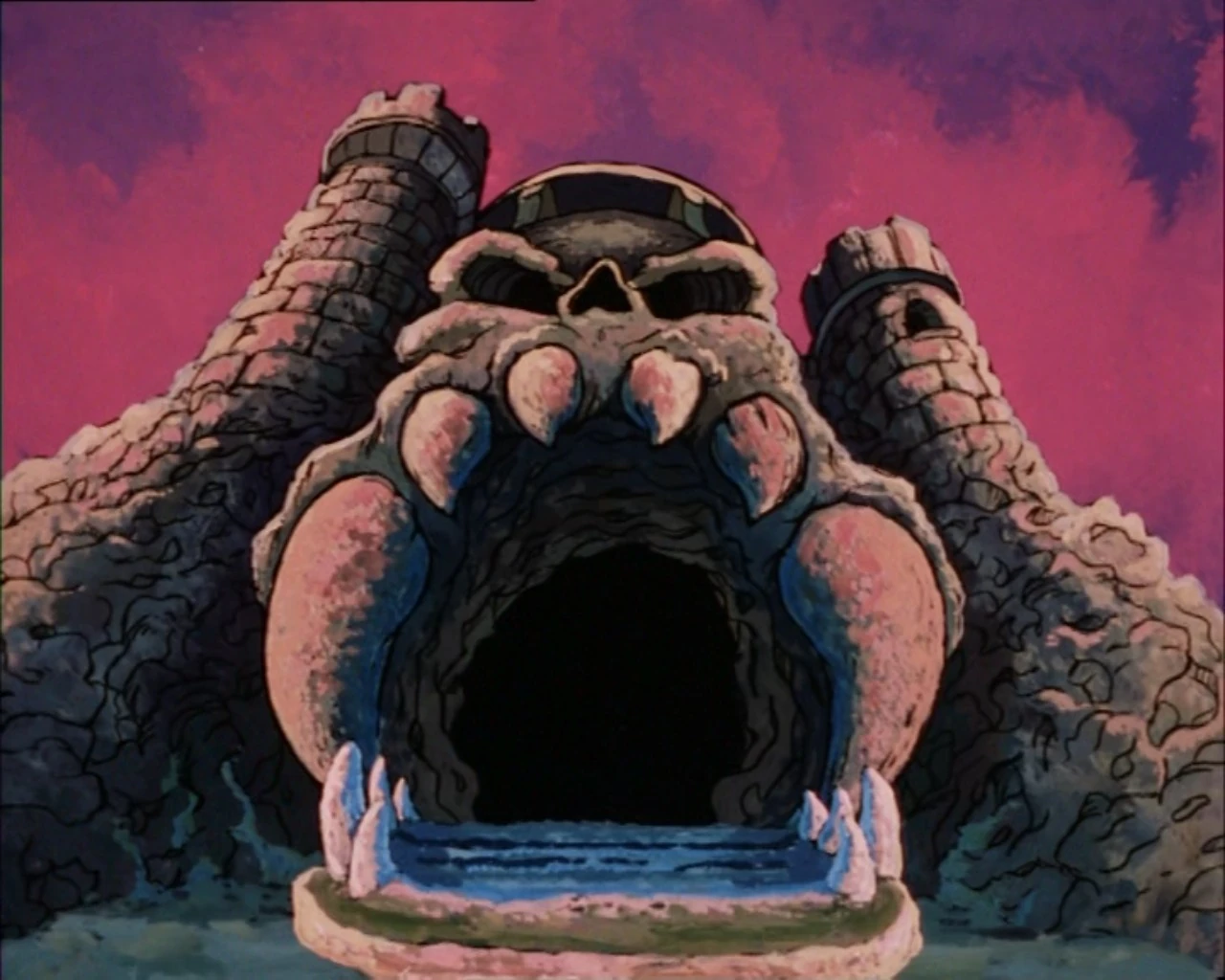
Blackskull Castle, eldritch place of power dating back to before the time of Aurora. The Totems of Blackskull are fabulous items of power held in its halls. Legends tell that if the Arcana Crystals are ever united in the depths of Blackskull Castle, their owner will be elevated to godhood.


Enchanted Forest, woodland home to the Elves, one gets easily lost.


Forge Mountain, volcano and home of Dwarves.


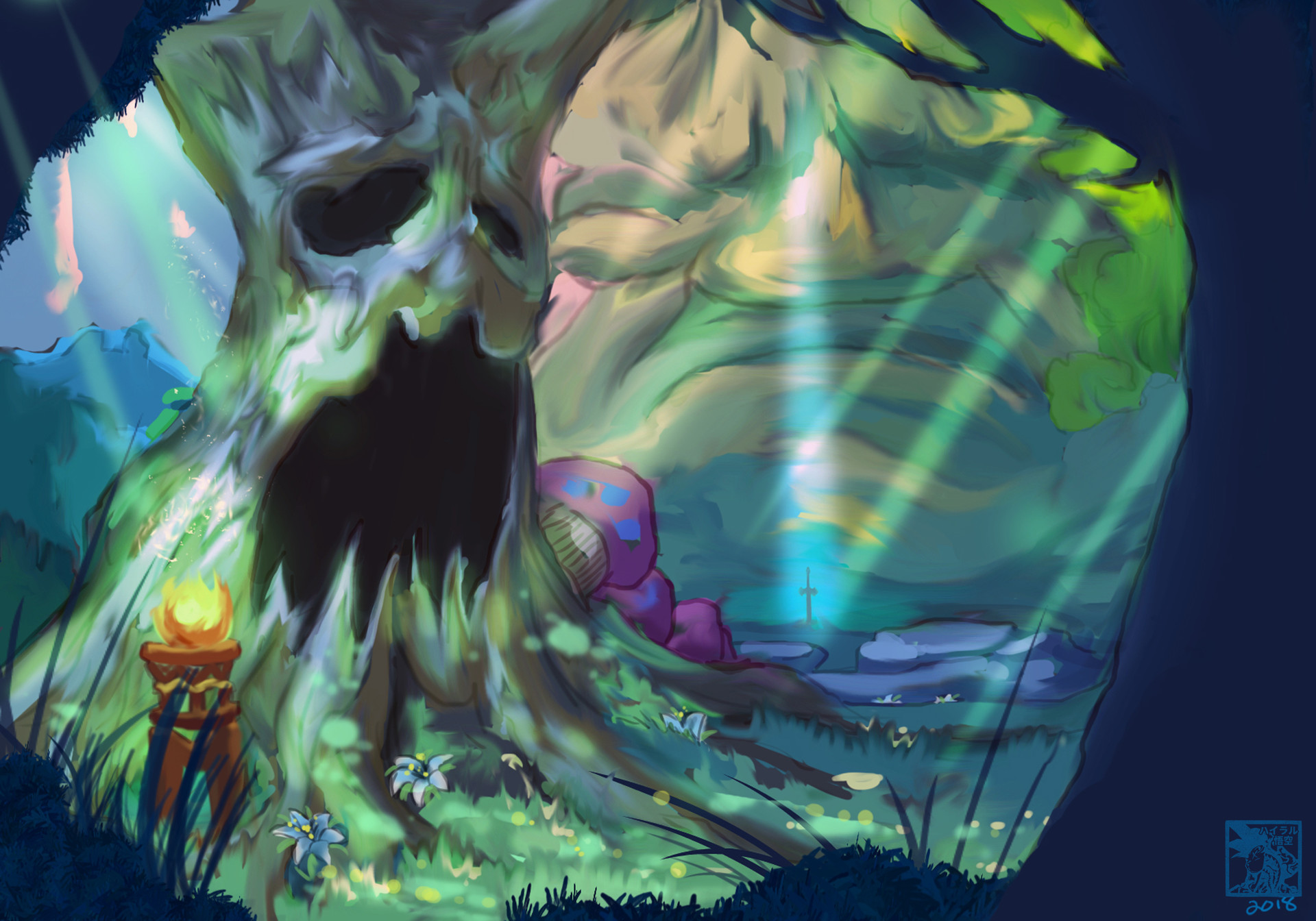
Great-Grandfather Oak, the oldest tree in the Enchanted Forest


Great Lake, largest body of water in the vicinity of Palladium.


Mushroom Forest, a stretch of giant fungi.


Palladium, mightiest of the Western Kingdoms espousing freedom and democracy.


Shadow Veil, the curtain of black smoke that forms the border between the Western Kingdoms and the Undying Empire.


vrijdag 10 mei 2019

The Western Kingdoms of ARCANA

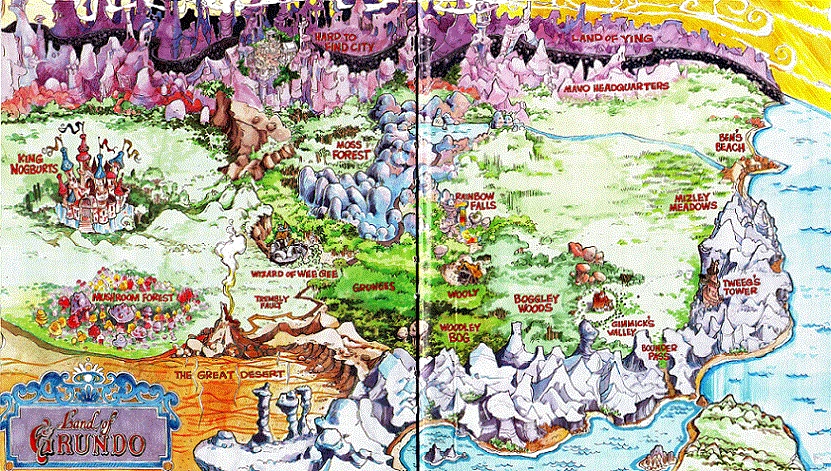
Risen from the ashes of the fall of the old empire, the Western Kingdoms are bastions of good in the World of ARCANA. It is a land reminiscent of Grundo or the Land of Ooo.


The folk of the Western Kingdoms are mostly pleasant, hardworking people. The kings and queens are wise and just (even if occasionally assisted by scheming ministers and plotting priests). The weather (magically controlled) is fair and monsters and threats are contained by patrols and knights.

The mightiest of these are the Knights of Palladium, the strongest of the Western Kingdoms.


The land is home to magical creatures and contains many wondrous locations. Adventurers operating out of Palladium regularly scout out these locations and unearth secrets and treasures of the ancients.


The Western Kingdoms are home to a diverse mix of human ancestries. Wandering the streets of Palladium you can meet Volcae, Qahtani, Valar, Aurorans and Teutons, in addition to the other races such as Elves, Dwarves and Animalfolk.


woensdag 8 mei 2019

Tone and Style in RPGs

Over at Monsters and Manuals, this post continues to spark discussion. It is a post about the setting of the D&D game as "Straight Man". In other words: players bring more than enough antics to the table, there is no need to interject levity and humor in the setting.

Trey over at the Sorcerer's Skull disagrees. And I have found that I don't enjoy seriousness and grimdark as I once did. In order to provide a fun game for my friends and family, I've decided to turn a page on a new chapter and let new inspiration guide my creation.

When I was young, my Saturday mornings were filled with action packed animated adventures. The adventures of He-Man and the Masters of the Universe, The Transformers, Legend of Zelda and Thundercats are all near and dear memories of my childhood. So when I was looking for inspiration to make my game more kid-friendly (and direct it away from brain-eating zombies) I naturally struck on these memories.

The World of Arcana is the theatre of a classic struggle of noble heroes versus tyrannical villains. The Knights of Palladium struggle against the mindless hordes of the Undying Emperor. Dividing the Western Kingdoms, bastions of light, and the evil Eastern Empire, is the Shadow Veil, a dark curtain of smoke. But other threats lurk. Beneath the earth in Sub-Arcana, Queen Chroma, Mother of Monsters, spawns vile monstrosities. To the south, in the jungles of Savagar, the Elven sect called Oberon's Children plots revenge against the humans that drove them from their ancient glades. And to the far east, the mysterious Enlightened make plans for world domination. All the while, an ancient force of evil, frozen in the far north, plots and schemes to collect the powerful Arcana Crystals that promise power and divinity.

I seek to make this world not another Tolkienesque, Realmsian high fantasy setting. I try to hew close to the saturday morning cartoons that inspired Arcana.

maandag 6 mei 2019

ARCANA Adventures

Stuff I am working on for my new setting, potentially available for my family game. The setting includes elements that I have developed in stories over the last twenty years. 

"The World of ARCANA was once a realm of magic, peace and progress. Great artifacts were fashioned from the magical substance of Arcanite. Guarded by the Dragon Knights, the Emperor reigned just and wise. Until, one fateful day, the Emperor was betrayed. The Dragons vanished, and all magical progress was lost to history. Now, the Western Kingdoms remain free while the Eastern Empire toils under the weight of the evil Undying Emperor. The Knights of Palladium now wage a continuing battle to contain the mindless hordes of the Undying Emperor."


The Western Kingdoms are bastions of Good, protected by faithful knights and shielded by divine power. Palladium is its mightiest city, a center of commerce and diplomacy. The Eastern Empire is a realm of Evil. The old Imperial capital of Aurora now lies perpetually shrouded beneath dark clouds and thunderstorms. Separating the east and west is the Shadow Veil, a dark curtain of smoke and death.


The Western Kingdoms are bounded to the west by the great Sea of Storms. To the south lies the secretive continent of Savagar, with its stark deserts and primal jungles. Beyond the Eastern Empire lie the lands of Yang, where the Enlightened hold sway. Far to the north lies the Hidden City, where an ancient force of Evil is imprisoned in ice.


vrijdag 3 mei 2019

Shaping the Campaign Premise

Although I love working on the Draconis setting and I am pleased with the progress so far, something began to feel off in the last two weeks. Yesterday, I finally knew what that was: the world is just too gritty.

Now don't get me wrong, I love me some Dark Sun, some Walking Dead, some Game of Thrones and Warhammer 40K. Yet for a world I am building potentially for my children later to game in, hordes of redskinned undead ready to devour your fighter if you misstep doen't feel right.

So I am reframing that bit. As a matter of fact, I'm chucking various elements from the setting, including the name. Out are the Plaguelands, the Red Death, The Keep and the term Bloodstone. Things I keep:

  • Elves from Outer Space;
  • Magic of the Land;
  • the Power of Faith;
  • Dragon Knights;
  • The personalities of the Keep;
Join me in a few days as I turn the page on a new chapter in campaign design.

woensdag 1 mei 2019

Draconis Blog Index

As work on the setting continues, here are all posts pertaining to the first iteration: Draconis.

Setting Information
Short Description
Rules of Magic

Places
The Plaguelands
The Keep

Monsters
The Red Dead

Player Resources
The Trader Rogue Archetype
Player Handout

History and Mythology of Draconis
Early History
Fall of the Empire