Posts tonen met het label Westerrealm. Alle posts tonen

dinsdag 29 juni 2021

Journey into the West

Western Oerik has been on my mind again lately, emerging once again in a weird way that setting concepts do after months or years languishing on the back-burner. I don't know what triggered it; it happened a few weeks ago after watching de Undeadwood Critical Role series. My mind went to the subject of Murlynd, the paladin-sherrif hero-god of the Greyhawk setting and I found myself asking: "Where did he get those six-shooters?"

I know the formal answer is "From Gygax's Boot Hill home game," or something along that line, but I went in another direction. I thought, wouldn't it be cool to combine my foray into flintlock fantasy with the world already developed here on this blog and in my 5E home game, set it in Western Oerik and add in some more crazy things? So I did.

A thousand years ago, refugees from two dying empires, lands consumed by war, fire and devastation, fled into the wild lands of the west. Encountering jeweled city-states and tribal kings, monsters, orcs, elves and each other, their destructive war continued, on a smaller, more primitive scale. But their new, savage environment demanded more and less of the survivors. In order to live, thrive and survive, the peoples had to adapt to their new home. Over a few generations, their inherited enmity petered out. Struggles for ideology and supremacy faded into the background, devolving into more common conflicts over land and resources. Within a century, the old hatreds had faded, bands of survivors and local tribes intermarried and new towns and alliances developed, coalescing into Nine Kingdoms.

The most powerful of these new towns came to be named Aurora, city of a new dawn. From the westernmost coast of the land, Aurora’s influence spread across the Nine Kingdoms and outposts and trade roads were established. Secrets of a forgotten past were discovered, and magical lore reached new heights. Across the sea, contact was made with the peoples of the Utter West. Many tribes and city-states united under the banner of the Dragon Empire. Yet war continued. 

The War God, Stratis, strode across the Savage West, playing an intricate divine game of dragonchess, setting the Nine Kingdoms comprising the Dragon Empire against one another, sharpening the machine of conflict. Never peace, always war, the Dragon Empire wasn't able to build a sphere of protection and security. 

One man, a priest, sought to change that. His name was Aenarys and it was he - a prophet of peace - that dared to challenge the God of War. He failed even as he succeeded.

Stratis died, but his dying breath changed the land. A red veil covers the land, scarlet shadows bring forth terrible monstrosities and the Dragon Empire crumbled. The Crimson Shroud brought madness and despair to the metropolises of the Dragon Empire. Instead of ushering an age of peace, Stratis' death fanned the flames of war as armies clashed and survivors gathered into warbands. Dragons claimed new territories in the wilderness, reducing the free peoples under their wings to savage slaves. New monsters and aberrations flooded the towns and castles of the Nine Kingdoms, the great Tarrasque among them. Civilization was brought to the brink of extinction, clawing to hold on. Only the heavily fortified cities of the Liga Elves in the interior, and the well-defended band of holdfasts, including Aurora, on the Agitoric coast were spared the destruction.

Now, centuries later, the Nine Kingdoms have rebuilt themselves, in the image of a forever war. Using magic and military might, and the mineral known as bloodstone, the Kingdoms have eked out a perimeter of safety in the vast and savage land. 

This is a land of stark contrasts, savage beauty and howling wilderness. The Savage West is home to a large variety of environments, flora and fauna. From the scorching deserts of the southwest, to the forested mountains of the Agitoric Northwest, to the Great Plains abutting the Redwall Mountains to the east, to the humid jungles of the southeast, every climate and all manner of beasts can be found here. During the day, the sun bakes the interior highlands into searing deserts, while providing a comfortable warmth in the northwestern forests. At night, the pale moon of Raenei sheds wan light on the lands beneath, accompanied in quarterly phases by her aquamarine sister, Kule. 

Ruins and dungeons of the centuries-distant Age of Wonder dot the wilderness. Ancient magic and forgotten lore can be found in the remains, if one is brave enough to face the dangers these expeditions entail. When traveling the Savage West, one can stumble into pockets of high magic, demarcated by an electric buzz playing on the skin and a strange sensation. These Wildlands are pockets of primal magic, connected to dragons, monsters and magic. Most times, these fading lands are wild and beautiful environmennts but sometimes these pockets are shadowy and dark, pulsing with the energy of death. These Shadowlands give rise to spirits, ghosts and the living dead. The Savage West is beset by wild monsters and dark magic. Yet there is hope, for brave adventurers venture into the wild to aid burgeoning towns, fight monsters and establish new outposts. To plumb forgotten dungeons and seek out relics of the past, and to discover and mine veins of bloodstone, to forge into new tools and the foundation of a new age of peace and light. 

The most powerful of these tools are the weapons of the current age, bound to the Crimson Shroud, unable to function beyond the western lands bearing Stratis' curse. Made from bloodstone, yet effective all the same, these Firebrands are  brandished by Legions of wielding soldiers, raining elemental fire and hot lead on the battlefield. Aided by the automaton-cannons known as Pulverizers, armies march across the wartorn landscape, fighting monsters, warbands and enemy nations.

Welcome to the Savage West.

donderdag 16 april 2020

Peoples of the Westerrealm

Although humanity is widespread and the most multitudinous race in the Westerrealm (being primarily of an olive complexion with dark hair, but other skin-tones and haircolours are prevalent as well), it shares the land with a number of nonhuman peoples, recounted here:


Elves
Descendants of their space-faring precursors, the Elves of the Westerrealm are similar to their eastern brethren, the houses that migrated away from the cradle of civilization. In addition, the direct heirs of the Eldar (star-people, in the Elvish tongue), called Nimbus Elves call the Westerrealm home. They make their abode in starlit forests and on mountaintops, hidden by the luminous stars of heaven.


Smallfolk: Dwarves, Halflings and Gnomes
Unlike in the eastern realms, the peoples of dwarves, halflings and gnomes are considered to share a common ancestry here in the Westerrealm, having differentiated on their migratory trail to the land of the rising sun. In contrast to their eastern cousins, the smallfolk of the Westerrealm are not particularly known for their underground existences. They live among Men all across the land, although some stick to the "Old Ways" and live in isolated cabins that hold a single dwarf family. All around, they are less inclined to warfare and fighting than the eastern clans and more industrious and mercantile.
[Author's note: I am considering making the Dwarves of Azurth available as a PC race.]

Smallfolk that take up a life of wandering, either by land or by river, are known as "halflings", for they are always "half-there", always their eyes on the horizon. The smallfolk that live in forests - be they enchanted or not - are known as gnomes. All are known for wearing pointy red caps.


Animalfolk
Called "Therion" in the old tongue, Animalfolk are the second largest population group in the Westerrealm. Some sages even say that the Animalfolk were here before Men or even the Eldar. Not naturally inclined to build cities and civilizations, the Animalfolk live in the cities of Mankind and are differentiated into various animal types, the most common of which include:


Orcs
Common folktales claim that the brown, savage folk known as orcs were once Eldar seduced to evil by dark gods. And for sure, time out of human records, they have been a plague upon the lands of the Westerrealm. Whatever their origin, there is great emnity between the races of orcs on one side and the elves and smallfolk on the other.


Dragonborn
In the days of the Dragon Empire, the race of the dragonborn were the favored warriors, stewards and sages of the Great Dragons. With the fall of that empire, its society and organization collapsed as well and the dragonborn clans took to a life of wandering the Westerrealm. Nowadays, they are a rare sight indeed and only scattered warbands of them remain.


Tieflings
Common in the lands conquered by Phaeton, the Morninglord, tieflings carry a bit of otherworldly blood. They aren't shunned in the Westerrealm like they are in the eastern kingdoms, yet the palpable taste of ash and vinegar makes even the most hardy Burgundy adventurer squeamish at times.

maandag 13 april 2020

Undulating Burgundy Marches: First Map!

Click me, ye explorer!
For a first experiment in hand-drawn mapmaking, I haven't disappointed myself! This map of the Burgundy Marches was sketched by hand with pencil. The labels have been added with typing in Paint. I have ordered inking pens so an inked-up and technicolor version of the map will follow. But for now, explorers of the Marches must make do with this prototype.

I am particularly satisfied with how Mt. Snowpeak and Rusty Lake turned out. I'll have to practice making an icon of a classical Greek-styled temple for the Library of Omnibus. The rest is an okay start.

Still left to consider are the paths that adventurers can traverse in the Marches. The whole seems rather "this forest goes here, these mountains go here"-cobbled together. And it is. I would like my maps to have a bit more intelligence to them.

vrijdag 10 april 2020

The Syndicality of Nymma

Ostensibly led by the Commissioner of the King (though which king is a matter of debate and frequently changes as the tides of the Whatsitabout War shift), the town of Nymma is essentially a syndicalist commune. This has provided the townspeople with great zest and energy, sorely needed on the marcher frontier, but has led to a number of ineffective policies. The local Guild of Thieves and Bankers (aren’t they the same thing?) has taken advantage of this political vacuum in order to create various racketeering and ponzi schemes, though a recent economic downturn means hardship also for the Guild.

Though originating as a feudal town under a noble line in the days of the Dragon Empire, Nymma has come a long way since then. Princess Ruby is the sole remaining heir of that noble line but owns no land and has no legal authority. The actual governing of the town lies in the hands of an ever-changing and eclectic number of cabals, coteries and factions, the most numerous, most powerful and richest of which is the aforementioned Guild of Thieves and Bankers. However, the communo-anarchic nature of politics in Nymma being what they are, this doesn't mean the Guild actually sets the course of things in town. Other power groups are the Collective of Magi (a socialist but deeply divided group of wizards, sorcerers and warlocks), the Union of Independent Contractors (a network of mercenaries, torchbearers and down-and-out adventurers) and the Scarlet Swords (the Nymma town guard). Curiously, the coteries that run the Raad (town council) and the Hof (the courts) wield no serious power at all, being mired in debates about public representation and the subject of dikastocracy.

Nymma’s largest building is its Great Stained Glass-Domed Temple with two towers flanking its entrance, originally dedicated to the ancestral gods of the area. In recent decades, increasingly arcane influences have entered the temple, with spirits, petty godlings (such as the fickle Dice Gods) and nascent demigods in pursuit, including a cult of the Beer God led by that high priest, titled the Magister Carceri et Sub Terra Exsulto. This cult of the Beer God has become increasingly popular for its annual Totem-rites wherein supplicants dress up as various and sundry animals and personages for three days of alcoholic festivities, after which the Beer God will sulk and disappear for forty days.

The syndicality has largely been kept out of the Whatsitabout War, though not for lack of trying from outside sources. Even now, a Luminous Legion of Phaeton the Morninglord besieges the town from their camp on the neighboring hill. But the sheer strangeness of Nymma has so far thwarted any attempt at invasion. From Nymma out, young adventurous types defy the Legion and venture out into the Marches in search of artifacts from folklore and mythic danger.

donderdag 9 april 2020

Religion in the Undulating Burgundy Marches

Priest: "What do we say to the God of Beer?"
Worshipers: "Bring me another one!"
- Ritual Prayer to Qorn

"Beer for the Beer God!"
- A common toast

Faith in the Undulating Burgundy Marches is, as it turns out, a strange thing.

For the better part of human history, the Westerrealm has held to a pantheon of common gods. The people lived in awe of names such as Boccob, Incabulos, Ehlonna and Ralishaz. Temples were founded for these great and luminous beings all across the land. Over time, other faiths such as those of Kord, the Stormlord, and Istus, Lady of Our Fate, were introduced from foreign eastern nations. The large temples and organised religious organisations of the Westerrealm are each dedicated to one of these common and widespread deities.

For every common deity, however, the Westerrealm is home to a demigod upstart, forgotten godling, pretentious nature-spirit or free-roaming sentient concept. Some of these wayward divinities stay around long enough to gain a foothold in civilization and expand their body of worshipers. Others are discarded, fused as aspects with common deities or mutated into entirely new concepts.

Three of these divinities with a large presence in the Undulating Burgundy Marches are described here:


Qorn, the Beer God
A divinity of uncertain origin. Some say he is an outcast agricultural deity, washed up in the Marches and taken to nursing his woes over fine craft beer. Others claim Qorn is the collective guzzling mirth of taverngoers everywhere in the Westerrealm. A select sect holds the Beer God to have once been a mortal man, an adventurer, a hero even, whose mirth and whose sorrow were both so large that the ale he consumed took on magical qualities which propelled him to demigodhood. But that is surely false, heretical and unholy. Debates over Qorn's nature are always accompanied by large amounts of fermented drink, bawdy songs, jokes, and emotional arguments and last well past midnight. These theological discussions almost always end in a fistfight with an inconclusive outcome, after which the combatants will fall into each other's arms and proclaim eternal brotherhood. "Beer for the Beer God!" is then shouted.

Whatever Qorn's origin, no one can dispute his influence in the Undulating Burgundy Marches. The Commissioner of the King is a known adept of the God of Beer, as are many adventuring types undertaking doomed expeditions to Snow Mountain or the Out-of-Place Jungle. His cult at the Great Stained Glass-Domed Temple is one of the largest and the annual festival in his name, wherein supplicants dress up as various and sundry animals and personages for three days of alcoholic festivities, after which the Beer God will sulk and disappear for forty days, is the grandest in town.


Lady Death
The east has Nerull, the south has the Raven Queen, the Marches have Lady Death. As in every culture, the peoples of the northwestern Westerrealm, of which the Undulating Burgundy Marches are part, have an anthropomorphic conception of Death. In contrast to the reaper dreaded in the eastern lands, or the indifferent cold god of the south, Lady Death is a caring and merciful deity. Her embrace is warm and the release into her halls is, in the Wyld-infected, volatile areas of the Marches, sometimes considered a natural and accepted part of life. She is depicted as a robed, skull-faced woman but she can also appear as a beautiful female of the same species as the viewer.


The Dice Gods
Perhaps owing to the large influx of scallywags, outcasts, explorers and mercenaries into the Undulating Burgundy Marches, this godhead has increased in attention in recent years. These fickle gods of fate are said to be the masters of destiny of all, perhaps even guiding the Cosmic Flail Snail on its slithering path. Portrayed as seven polyhedral stones in the Great Stained Glass-Domed Temple, the Dice Gods are not actively worshiped or named, but as every soul knows their role in this great cosmic game, offerings are left at their altar all the same. Even priests dedicated to the great deities and other minor godlings know to offer some myrrh or incense to the mighty polyhedral set.

Except for the priests of Boccob. They don't care.

maandag 6 april 2020

Circumstances of the Westerrealm

Like any land, the Westerrealm is beset by current events and affairs foreign and domestic. Here are a few that are raging around the lands, including the Undulating Burgundy Marches:

The Octarine Malady
Originating with some malign, Wyld-born pest, the disease known as the Octarine Malady has spread around the Westerrealm, claiming the lives of thousands. Named after that infamous yet not directly visible color of magic, the Octarine Malady first manifests as a dull sparkle of the aura. Symptoms thereafter include coughing up fairy dust, weakness and exhaustion, octarine warts and finally one of the following effects:

1d6
1 Spoons and other metal implements around the victim start bending.
2 Victim is cut in half by magic, accumulating levels of exhaustion until death sets in.
3 Instead of coughing up fairy dust, victim starts coughing up sharp knives, daggers and finally a sword previously swallowed by a minor stage magician, killing the victim on the spot.
4 Victim disappears, subject to a plane shift spell with a random destination.
5 Victim is polymorphed into a white rabbit.
6 Victim is polymorphed into 1d6 white pigeons. Can only be polymorphed back if all pigeons are brought back together.


The Whatsitabout War
Everyone knows there's a war on out there. For the better part of a century, kings and princes have been fighting each other, sending armies and warbands against their rivals. All know its catastrophic scope as entire principalities have been wiped off the map since the beginning of the conflict. No one knows the reasons or inciting incident of the war, however, giving rise to the moniker of this decades-long conflict.


The Ecclesiarchy and Counter-Ecclesiarchy
Religious and theological disputes have reached a boiling point in recent years, as the temples that have stood for a millennium now suffer challenge and controversy. Various sects have branched off from their main temple organisations and an entire Counter-Ecclesiarchy has set up shop rivalling the old ways of the established ecclesiarchies.


Rediscovered Magical Arts
A veritable rebirth of the magical arts of the Old Empires is underway in the Southlands, as ancient theories and techniques are "discovered" in abandoned ruins in areas under occupation by the Luminous Legion. This has given rise to an economic and magical expansion in these lands affected by the arcanological rebirth. A class of Simulacrum-men, called this manner for their efforts in copying the arts of the ancients, has emerged in the southern cities, patronized by rich merchants and princes. Of course, in most of the lands of the Westerrealm, where the magical energies of the Wyld are volatile, these rediscovered arcane arts invariably lead to chaos and mayhem.


donderdag 2 april 2020

Highlights of the Undulating Burgundy Marches

A region of the Westerrealm with a pleasant, temperate but warm climate, teeming with magic, the Undulating Burgundy Marches are a must-see for every self-respecting worldly adventuring-type. Swathed in red, orange, gold and brown colors - the colors of autumn - low, rolling hills from which the region takes its name are topped by picturesque villages, composed of white stone houses supported by large black wooden beams. The Rusty River, so named for the Rusty Lake it empties into, babbles and meanders through the dells. Packed between the hills and watered by the river lies an alarming and magical variety of geographical terrain types. Here, presented for the first time, are some of the highlights of the Undulating Burgundy Marches:


Great Library of Omnibus
Forgotten by all but a handful of sages and scholars of the arcane stands the Great Library of the fallen Dragon Empire. This gem, tended by Omnibus, the highly intelligent and wise owlbear librarian, the Great Library is a magical demesne. Fey creatures, ancient spirits and fell monstrosities roam its halls, warding against intruders. But for those that dare brave the dusty corridors, great knowledge can be uncovered. And in the Marches, where conviction shapes the surrounding lands to one’s whim, knowledge is power…


The Out-of-Place Jungle
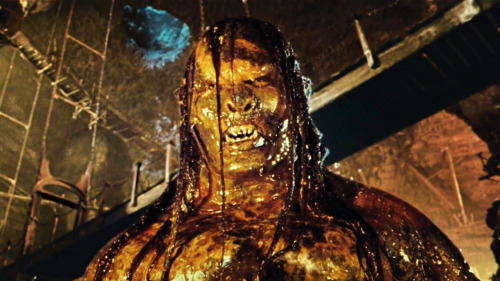
Likely ported here from another place, time, or dimension, perhaps in order to colonize the area but prevent arduous voyages, the Out-of-Place Jungle has stood in its current location since before living memory. It is inhabited by friendly red-capped gnomes living in mushroom houses and by bands of carnivorous halflings. The major menaces in this area are the giant prehistoric reptiles that thunder through the jungle, and the malign and infectious purple goblinoids, whose bite turns a victim in a murderous, volatile, goblinoid itself. The King of the Jungle is a godling girallon by the name of Zarkan, who holds as domain a ruined, exotic temple complex in the heart of the jungle. Phaeton’s Luminous Legion has made a makeshift camp out here but the Legion is out of its depth. Golden-skinned vampires also have taken interest in the region.


Snow Mountain
A rocky mountain, alone in the rolling lands, snow-capped and inhabited by the evil Snow Goons and their undead minions. The mountain itself is a curiosity, as geological conditions give no cause for the formation of such a peak here in the Marches. Its inhabitants are even more curious. Aside from the aforementioned Goons, Snow Mountain is inhabited by hermit werewolves, a spiritually enlightened stone giant, a lecherous young silver dragon ski-instructor and a pack of saber-toothed tigers.


Rusty Lake
Contrary to popular belief, the rust-brown color of this lake's water is not caused by magical means or the volatility of the arcane Wyld energies in the Marches. The lakebed is composed of exposed iron deposits, and oxidation of these deposits grants the lake its defining characteristic. The lakebed's iron has given birth to a culture of metal-loving gothic mermaids, who spend their time luring insecure male townsfolk to their watery doom.


The Fens
An area of marshy swampland surrounds the Rusty River here, teeming with life and holding a few of the most stunningly beautiful locations in the Marches. Of course, the Fens are also the swamping grounds of the local coven of hags. It is unwise to travel in the Fens at night: one's soul could easily wind up in a bag to be traded on the Lower Planes by morning. A number of witches make their home in the Fens as well.


The Hinterlands
In some places where vegetation is scarce, the sun beats down on the land relentlessly. The Hinterlands, an expanse of flat, arid plain, north of the Marches, is such a place. Murderous cacti and venomous insects are the native life here. Folks would avoid this area altogether if it weren't for Dragonboulder Keep smack dab in the middle of the Hinterlands. The ancient castle was the demesne of the ruler of the Burgundy Marches in the time of the Dragon Empire. The Dragon Knight that was the master of the Keep, here at the edge of the world, simply vanished one day and none have been able to determine whence. His dragon, a rare specimen of the orange variety, is known to have remained in the area and is presumably in hibernation nearby, along with, one can assume, a sizable treasure hoard.


Gloomy Forest
As far as gloomy forests go, Gloomy Forest is perhaps the gloomiest of all. Glowing a sickly blue-green color at night, as all manner of ghosts, spectres, fey and unnatural things come out of the woodwork, it is a place best avoided. The local gloom elf community is a trading partner of the human towns in the Marches, their ghost wine fetching a high price as far south as Palladium.

Burgundy Bestiary: Snow Goons

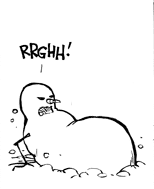
Having invaded from the ice-swept, boreal reaches, the dreaded Snow Goons threaten all living species. Bringing unimaginable cold and never-ending snowball battles in their wake, their arrival threatens to bring civilization to a halt. Their origin as of yet is a mystery, yet they command mastery over the soulless, corporeal undead. A connection with the metaphysical incarnation of that skeletal wraith, Death, has not been ruled out by the theologians of the Great Stained-Glass Domed Temple.

Cold Life: The Snow Goons are a mystery. Auguries and slugreadings (where philosophers seek to glean truth by consuming gastropods in the hopes of connecting with the Great Cosmic Flail Snail) have thus far only yielded the fact that the Snow Goons comprise "a different kind of life".
The Walking Dead: For reasons similarly unknown, Snow Goons seem to have mastery over the most primitive forms of undead (skeletons and zombies), often using these as shock troops while raining snowy death from afar. Those slain in the vincinity of the Snow Goons soon rise as zombies themselves.
Snowy Warriors: A party (1d4+2) of Snow Goons, once stripped of their undead entourage, is no cakewalk. They are perfectly capable of defending themselves. They are resistant to attacks made with mundane weapons but, as creatures of the arcane, are susceptible to magic. Therein lies mankind's chance, but their possible demise as well, as using magic stirs the Arcane even more, increasing the strength of unnatural forces.


SNOW GOON
Medium elemental, chaotic neutral
AC: 17 (natural armor)
Hit Points: 53 (7d8+21)
Speed: 25 ft. (icewalk)

Str 14 (+2), Dex 12 (+1), Con 17 (+3), Int 16 (+3), Wis 14 (+2), Cha 11 (+0)

Skills: Stealth +4
Saves: Constitution +6, Charisma +3
Senses: Darkvision 120 ft.
Languages: Auran, understands Common

Damage Resistances: fire, lightning
Damage Vulnerabilities: magic and attacks with magical weapons
Damage Immunities: cold, poison, bludgeoning, piercing and slashing from nonmagical weapons
Condition Immunities: poisoned

Cold Service. A humanoid slain by the Snow Goon rises as a zombie under the Snow Goon's control as soon as the sun sets (immediately if it is night).

ACTIONS

Cold Touch. Melee Weapon Attack: +8 to hit, reach 5 ft., one target. Hit: 20 (3d8+6) cold damage.
Snowball. Ranged Weapon Attack: +8 to hit, range 40/80 ft., one target. Hit: 26 (4d8+8) cold damage.

dinsdag 31 maart 2020

Burgundy Bestiary: Purple Goblin


In the wet, hot expanse of the Out-of-Place Jungle, in the Undulating Burgundy Marches of the Westerrealm, a vicious menace stalks the land. Of nasty and mischievous demeanor, these Purple Goblins are a threat to all orderly and weal-loving types in the jungle. Furthermore, they seem to propagate in a remarkable manner: any small- or medium-sized humanoid bitten by a purple goblin turns into one.

Gnap! The first sign a gang (1d4+6) of purple goblins is near is the distinctive "Gnap!"-sound they make. Seeming frivolous at first, the gnapping increases as the purple goblins spy their prey, swelling to a cacaphony of shrill shrieks.
Destructive Menaces: Purple goblins are even more destructive than their greenskinned cousins. They have literally no regard for anything else than spreading havoc and mischief. A gang of purple goblins can overrun a town in no-time, infecting the inhabitants with their condition spreading like wildfire.
Bzzt!-disease: The source of the purple goblin-condition has been traced by arcane and astral sagelike types to be the "Bzzt!-fly", an as yet undiscovered species of tropical insect. The disease, once it gets hold of a humanoid of up to normal human size, rapidly transforms the subject into a purple goblin (or hobgoblin, for larger varieties). After failing the first saving throw, symptoms will start the following round, leaving the target prone and incapacitated on the ground. A gruelling transformation will begin, lasting 1d6 rounds after which the target stands up as a purple goblin, emitting a loud "Gnap!". A cure for the disease has not yet been determined, although it is expected the usual magical means of removing these kinds of conditions would work.


PURPLE GOBLIN
Small humanoid (goblinoid), neutral evil
AC: 13 (natural armor)
Hit Points: 13 (4d6)
Speed: 35 ft.

Str 8 (-1), Dex 16 (+3), Con 10 (+0), Int 8 (-1), Wis 11 (+0), Cha 8 (-1)

Skills: Acrobatics +7
Senses: Darkvision 60 ft., passive Perception 10
Languages: Gnap!
Challenge: 1/4 (50 XP)

Pounce Attack: The purple goblin can jump attack as a bonus action by making an opposed Dexterity (Acrobatics) check. Success grants the purple goblin advantage on its next bite attack.

ACTIONS
Bite. Melee Weapon Attack: +5 to hit, reach 5 ft., one target. Hit: 5 (1d4+3) piercing damage and the target must make a DC 13 Constitution saving throw or be infected by the Bzzt!-disease.

vrijdag 27 maart 2020

A map of the West.

As drawn by the Cartographer's Guild of the Southwest. High-level overview of the Westerrealm.

woensdag 25 maart 2020

The Cosmic Flail Snail


It is known for a fact that the Westerrealm is borne through the sea of stars on the back of the great Cosmic Flail Snail. Eternally crawling across the celestial void, leaving a trail of slimy cosmic truths in its wake, Great Gary (for that is the name given to the Cosmic Flail Snail by theologians and philosophers) knows what lies in store for the world. Attempts to divine this great prophecy from the mind of Great Gary by the use of snail-derived psychotropic drugs have so far failed.


Great Gary, the World-Bearing Cosmic Flail Snail (image by Jeff Rients)

dinsdag 24 maart 2020

Welcome to the Weird

This clicked into my head yesterday, as a setting idea for my Western Oerik setting, and a radical departure of Sword 'n' Sorcery-style standard fantasy settings:


From the North, vicious Snow Goons and their ghoul hordes threaten existence. From the South, the Celestial, Phaeton the Morninglord stretches forth his luminous hands to increase his writ. The Westerrealm is caught in the middle of this historic clash of forces, while princes, kings and priests vie for ideological supremacy in an attempt to change the discourse. Power-mad wizards and zealous clerics frazzle the threads of the Astral lattice that drapes the Westerrealm in splendor, awakening petty godlings long thought gone and stirring the elder Space Elves from their cocooning slumber.

Welcome to the Westerrealm, welcome to the Weird.


(Liberally inspired by Chris Kutalik's Hill Cantons and Trey Causey's Land of Azurth.)

Snow Goons

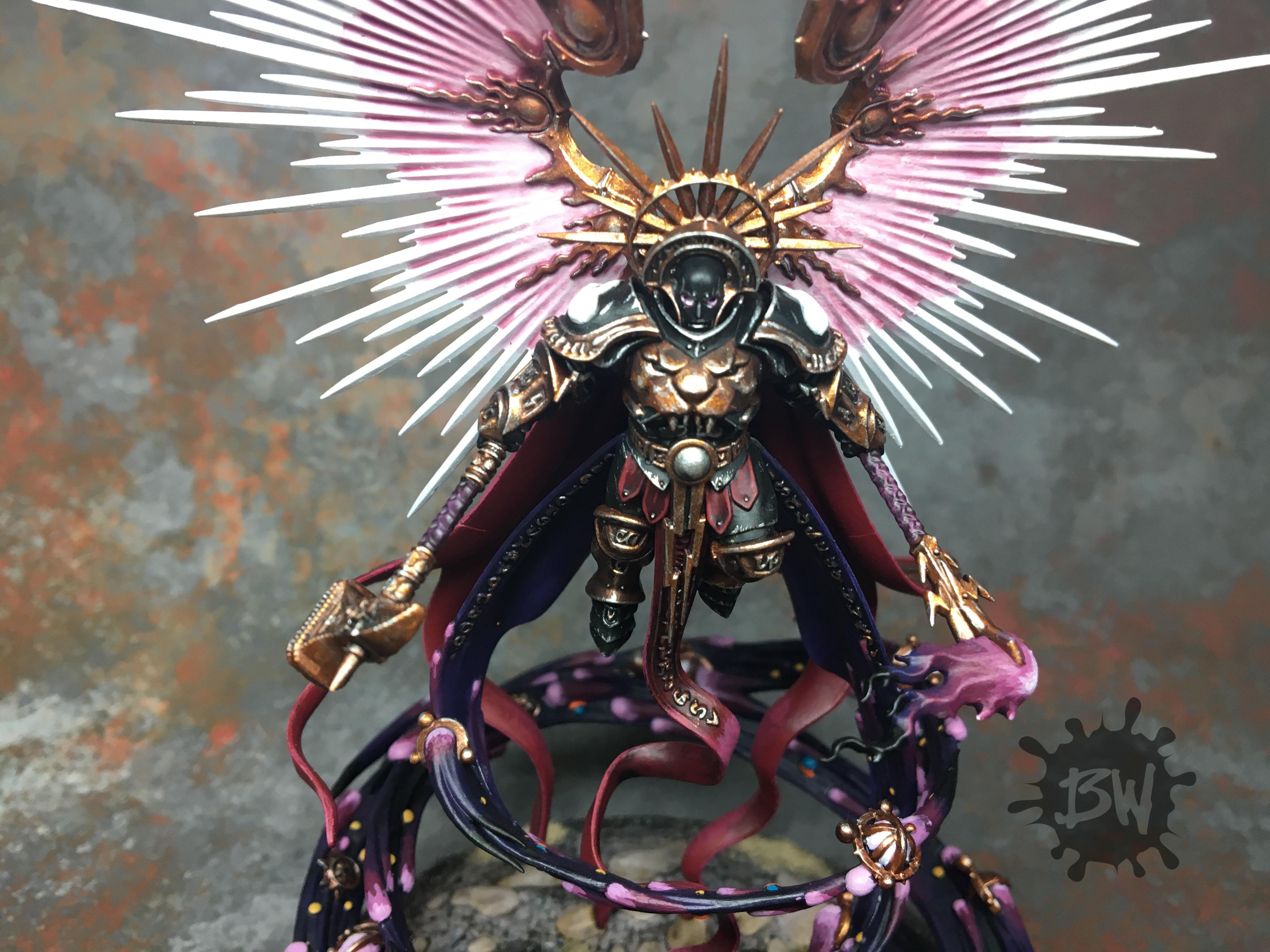
Phaeton the Morninglord, Rogue Space Angel

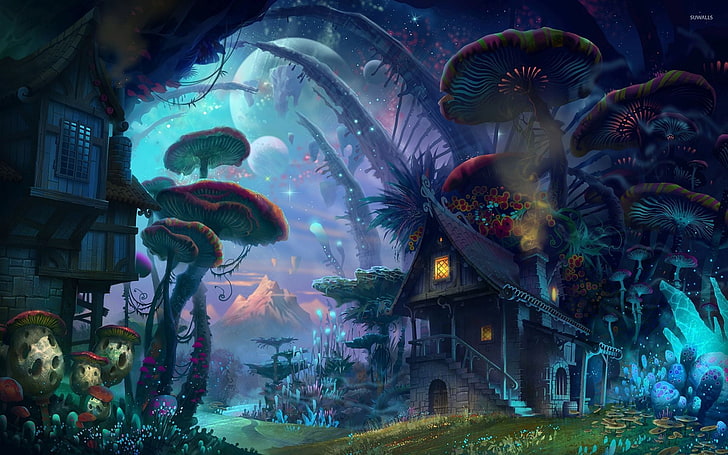
Frazzled Astral Lattice

Cocooning Space Elf