Posts tonen met het label homebrew. Alle posts tonen

dinsdag 29 juni 2021

Journey into the West

Western Oerik has been on my mind again lately, emerging once again in a weird way that setting concepts do after months or years languishing on the back-burner. I don't know what triggered it; it happened a few weeks ago after watching de Undeadwood Critical Role series. My mind went to the subject of Murlynd, the paladin-sherrif hero-god of the Greyhawk setting and I found myself asking: "Where did he get those six-shooters?"

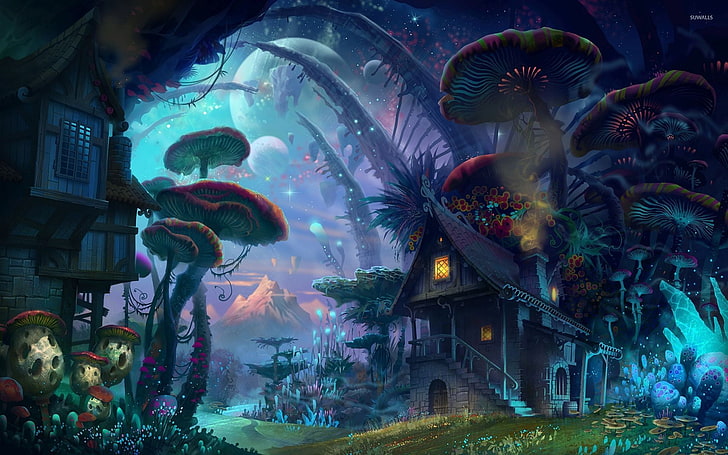
I know the formal answer is "From Gygax's Boot Hill home game," or something along that line, but I went in another direction. I thought, wouldn't it be cool to combine my foray into flintlock fantasy with the world already developed here on this blog and in my 5E home game, set it in Western Oerik and add in some more crazy things? So I did.

A thousand years ago, refugees from two dying empires, lands consumed by war, fire and devastation, fled into the wild lands of the west. Encountering jeweled city-states and tribal kings, monsters, orcs, elves and each other, their destructive war continued, on a smaller, more primitive scale. But their new, savage environment demanded more and less of the survivors. In order to live, thrive and survive, the peoples had to adapt to their new home. Over a few generations, their inherited enmity petered out. Struggles for ideology and supremacy faded into the background, devolving into more common conflicts over land and resources. Within a century, the old hatreds had faded, bands of survivors and local tribes intermarried and new towns and alliances developed, coalescing into Nine Kingdoms.

The most powerful of these new towns came to be named Aurora, city of a new dawn. From the westernmost coast of the land, Aurora’s influence spread across the Nine Kingdoms and outposts and trade roads were established. Secrets of a forgotten past were discovered, and magical lore reached new heights. Across the sea, contact was made with the peoples of the Utter West. Many tribes and city-states united under the banner of the Dragon Empire. Yet war continued. 

The War God, Stratis, strode across the Savage West, playing an intricate divine game of dragonchess, setting the Nine Kingdoms comprising the Dragon Empire against one another, sharpening the machine of conflict. Never peace, always war, the Dragon Empire wasn't able to build a sphere of protection and security. 

One man, a priest, sought to change that. His name was Aenarys and it was he - a prophet of peace - that dared to challenge the God of War. He failed even as he succeeded.

Stratis died, but his dying breath changed the land. A red veil covers the land, scarlet shadows bring forth terrible monstrosities and the Dragon Empire crumbled. The Crimson Shroud brought madness and despair to the metropolises of the Dragon Empire. Instead of ushering an age of peace, Stratis' death fanned the flames of war as armies clashed and survivors gathered into warbands. Dragons claimed new territories in the wilderness, reducing the free peoples under their wings to savage slaves. New monsters and aberrations flooded the towns and castles of the Nine Kingdoms, the great Tarrasque among them. Civilization was brought to the brink of extinction, clawing to hold on. Only the heavily fortified cities of the Liga Elves in the interior, and the well-defended band of holdfasts, including Aurora, on the Agitoric coast were spared the destruction.

Now, centuries later, the Nine Kingdoms have rebuilt themselves, in the image of a forever war. Using magic and military might, and the mineral known as bloodstone, the Kingdoms have eked out a perimeter of safety in the vast and savage land. 

This is a land of stark contrasts, savage beauty and howling wilderness. The Savage West is home to a large variety of environments, flora and fauna. From the scorching deserts of the southwest, to the forested mountains of the Agitoric Northwest, to the Great Plains abutting the Redwall Mountains to the east, to the humid jungles of the southeast, every climate and all manner of beasts can be found here. During the day, the sun bakes the interior highlands into searing deserts, while providing a comfortable warmth in the northwestern forests. At night, the pale moon of Raenei sheds wan light on the lands beneath, accompanied in quarterly phases by her aquamarine sister, Kule. 

Ruins and dungeons of the centuries-distant Age of Wonder dot the wilderness. Ancient magic and forgotten lore can be found in the remains, if one is brave enough to face the dangers these expeditions entail. When traveling the Savage West, one can stumble into pockets of high magic, demarcated by an electric buzz playing on the skin and a strange sensation. These Wildlands are pockets of primal magic, connected to dragons, monsters and magic. Most times, these fading lands are wild and beautiful environmennts but sometimes these pockets are shadowy and dark, pulsing with the energy of death. These Shadowlands give rise to spirits, ghosts and the living dead. The Savage West is beset by wild monsters and dark magic. Yet there is hope, for brave adventurers venture into the wild to aid burgeoning towns, fight monsters and establish new outposts. To plumb forgotten dungeons and seek out relics of the past, and to discover and mine veins of bloodstone, to forge into new tools and the foundation of a new age of peace and light. 

The most powerful of these tools are the weapons of the current age, bound to the Crimson Shroud, unable to function beyond the western lands bearing Stratis' curse. Made from bloodstone, yet effective all the same, these Firebrands are  brandished by Legions of wielding soldiers, raining elemental fire and hot lead on the battlefield. Aided by the automaton-cannons known as Pulverizers, armies march across the wartorn landscape, fighting monsters, warbands and enemy nations.

Welcome to the Savage West.

maandag 4 januari 2021

Homebrew: Mass Miniature Battle System

Sooner or later, every adventurer will be confronted by the rigors of mass battle, especially when they are in command of a fief. When armies clash, adventurers often take central stage. The outcome of a mass battle can be determined abstractly, as per this post. Alternatively, the engagement can be played out as an epic miniature battle.

These Miniature Battle Rules use a simplified system, in order to streamline play.


Glossary

AB: Attack Bonus
AC: Armor Class
HD: Hits
Hero: An individual miniature representing a single, heroic, individual
ML: Morale bonus
MV: Movement
Stand: one miniature, representing 10 individuals of that type
Unit: multiple stands of the same type, grouped together and performing actions collectively


Stat Blocks

Stand and Unit stat blocks are written in the following format:

AB (attack bonus); AC (armor); HD (hits); MV (move); ML (morale bonus); Special rules

Goblin
AB +4; AC 15; HD 2; MV 30; ML -1; Nimble Escape: Disengage as bonus action

Guard
AB +3; AC 16; HD 2; MV 30; ML +0


Turn Sequence

At the start of each turn, side initiative is determined. Each side rolls a d20, adding the Charisma modifier of the side’s general. The side that rolled the highest can decide the turn order.

On their turn, a side activates all units one by one. Once activated, a unit can move up to their movement and perform one maneuver. A maneuver is similar to an action in standard D&D combat: melee, ranged attack or spellcasting. Once all units of both sides have been activated, a new turn begins.


Movement and Distance

Movement is measured in points. Every inch of distance requires 5 movement points. Conversely, for every point of movement a unit can cross 0,2 inches or 0,5 centimeters. Movement can be broken up to take place before and after a unit’s maneuver.

Disengaging from an enemy within melee range requires an action, unless specified otherwise in the unit’s description. Neglecting to disengage while moving away immediately allows the enemy unit a melee maneuver.

Attacks and Hits

Most of the time, melee attacks are performed by the front stands of a unit. Exceptions are made for units with reach, whereby the second rank of stands is also allowed to make attacks. Ranged attacks can be made as long as the enemy unit that is the target of the attack is within range.

Attacks are made by rolling a d20 for every eligible stand in the unit and adding the unit’s AB per rolled die. For every roll that beats the enemy unit’s AC, a Hit is scored. The total number of Hits is divided by the enemy’s HD, the result is the number of enemy stands slain.

Melee maneuvers are made with Advantage whenever the enemy unit is wedged in between two attacking units.


Clashes

Whenever Heroes on opposite sides meet, there will be clashes. In this case, a regular D&D combat is initiated between the Heroes that are involved and 10 regular units of an adjacent stand as preferred by the side in question. After the clash is resolved, the Mass Battle will resume.


Morale

Once certain conditions are met, a Morale save must be made by the unit. Base DC 10. Failing the save means the unit becomes Frightened. The second time the unit fails the save, the unit becomes Routed and flees the scene. These conditions are:

After losing 25% of the number of stands
After losing 50% of the number of stands
After losing 75% of the number of stands (save made with Disadvantage)
When a unit’s Hero is defeated in a Clash
When confronted with enemies that have a characteristic causing the Frightened condition

Heroes are exempted from making Morale saves.

Rallying Units is possible by Heroes. As a bonus action, Heroes within 10 can make a Charisma (Intimidation) or Charisma (Persuasion) check against DC 10+the number of turns the unit has been frightened and routed. When the check succeeds, the unit may immediately make a new Morale save.

donderdag 2 april 2020

Burgundy Bestiary: Snow Goons

Having invaded from the ice-swept, boreal reaches, the dreaded Snow Goons threaten all living species. Bringing unimaginable cold and never-ending snowball battles in their wake, their arrival threatens to bring civilization to a halt. Their origin as of yet is a mystery, yet they command mastery over the soulless, corporeal undead. A connection with the metaphysical incarnation of that skeletal wraith, Death, has not been ruled out by the theologians of the Great Stained-Glass Domed Temple.

Cold Life: The Snow Goons are a mystery. Auguries and slugreadings (where philosophers seek to glean truth by consuming gastropods in the hopes of connecting with the Great Cosmic Flail Snail) have thus far only yielded the fact that the Snow Goons comprise "a different kind of life".
The Walking Dead: For reasons similarly unknown, Snow Goons seem to have mastery over the most primitive forms of undead (skeletons and zombies), often using these as shock troops while raining snowy death from afar. Those slain in the vincinity of the Snow Goons soon rise as zombies themselves.
Snowy Warriors: A party (1d4+2) of Snow Goons, once stripped of their undead entourage, is no cakewalk. They are perfectly capable of defending themselves. They are resistant to attacks made with mundane weapons but, as creatures of the arcane, are susceptible to magic. Therein lies mankind's chance, but their possible demise as well, as using magic stirs the Arcane even more, increasing the strength of unnatural forces.


SNOW GOON
Medium elemental, chaotic neutral
AC: 17 (natural armor)
Hit Points: 53 (7d8+21)
Speed: 25 ft. (icewalk)

Str 14 (+2), Dex 12 (+1), Con 17 (+3), Int 16 (+3), Wis 14 (+2), Cha 11 (+0)

Skills: Stealth +4
Saves: Constitution +6, Charisma +3
Senses: Darkvision 120 ft.
Languages: Auran, understands Common

Damage Resistances: fire, lightning
Damage Vulnerabilities: magic and attacks with magical weapons
Damage Immunities: cold, poison, bludgeoning, piercing and slashing from nonmagical weapons
Condition Immunities: poisoned

Cold Service. A humanoid slain by the Snow Goon rises as a zombie under the Snow Goon's control as soon as the sun sets (immediately if it is night).

ACTIONS

Cold Touch. Melee Weapon Attack: +8 to hit, reach 5 ft., one target. Hit: 20 (3d8+6) cold damage.
Snowball. Ranged Weapon Attack: +8 to hit, range 40/80 ft., one target. Hit: 26 (4d8+8) cold damage.

dinsdag 31 maart 2020

Burgundy Bestiary: Purple Goblin


In the wet, hot expanse of the Out-of-Place Jungle, in the Undulating Burgundy Marches of the Westerrealm, a vicious menace stalks the land. Of nasty and mischievous demeanor, these Purple Goblins are a threat to all orderly and weal-loving types in the jungle. Furthermore, they seem to propagate in a remarkable manner: any small- or medium-sized humanoid bitten by a purple goblin turns into one.

Gnap! The first sign a gang (1d4+6) of purple goblins is near is the distinctive "Gnap!"-sound they make. Seeming frivolous at first, the gnapping increases as the purple goblins spy their prey, swelling to a cacaphony of shrill shrieks.
Destructive Menaces: Purple goblins are even more destructive than their greenskinned cousins. They have literally no regard for anything else than spreading havoc and mischief. A gang of purple goblins can overrun a town in no-time, infecting the inhabitants with their condition spreading like wildfire.
Bzzt!-disease: The source of the purple goblin-condition has been traced by arcane and astral sagelike types to be the "Bzzt!-fly", an as yet undiscovered species of tropical insect. The disease, once it gets hold of a humanoid of up to normal human size, rapidly transforms the subject into a purple goblin (or hobgoblin, for larger varieties). After failing the first saving throw, symptoms will start the following round, leaving the target prone and incapacitated on the ground. A gruelling transformation will begin, lasting 1d6 rounds after which the target stands up as a purple goblin, emitting a loud "Gnap!". A cure for the disease has not yet been determined, although it is expected the usual magical means of removing these kinds of conditions would work.


PURPLE GOBLIN
Small humanoid (goblinoid), neutral evil
AC: 13 (natural armor)
Hit Points: 13 (4d6)
Speed: 35 ft.

Str 8 (-1), Dex 16 (+3), Con 10 (+0), Int 8 (-1), Wis 11 (+0), Cha 8 (-1)

Skills: Acrobatics +7
Senses: Darkvision 60 ft., passive Perception 10
Languages: Gnap!
Challenge: 1/4 (50 XP)

Pounce Attack: The purple goblin can jump attack as a bonus action by making an opposed Dexterity (Acrobatics) check. Success grants the purple goblin advantage on its next bite attack.

ACTIONS
Bite. Melee Weapon Attack: +5 to hit, reach 5 ft., one target. Hit: 5 (1d4+3) piercing damage and the target must make a DC 13 Constitution saving throw or be infected by the Bzzt!-disease.

woensdag 25 maart 2020

The Cosmic Flail Snail


It is known for a fact that the Westerrealm is borne through the sea of stars on the back of the great Cosmic Flail Snail. Eternally crawling across the celestial void, leaving a trail of slimy cosmic truths in its wake, Great Gary (for that is the name given to the Cosmic Flail Snail by theologians and philosophers) knows what lies in store for the world. Attempts to divine this great prophecy from the mind of Great Gary by the use of snail-derived psychotropic drugs have so far failed.


Great Gary, the World-Bearing Cosmic Flail Snail (image by Jeff Rients)

dinsdag 24 maart 2020

Welcome to the Weird

This clicked into my head yesterday, as a setting idea for my Western Oerik setting, and a radical departure of Sword 'n' Sorcery-style standard fantasy settings:


From the North, vicious Snow Goons and their ghoul hordes threaten existence. From the South, the Celestial, Phaeton the Morninglord stretches forth his luminous hands to increase his writ. The Westerrealm is caught in the middle of this historic clash of forces, while princes, kings and priests vie for ideological supremacy in an attempt to change the discourse. Power-mad wizards and zealous clerics frazzle the threads of the Astral lattice that drapes the Westerrealm in splendor, awakening petty godlings long thought gone and stirring the elder Space Elves from their cocooning slumber.

Welcome to the Westerrealm, welcome to the Weird.


(Liberally inspired by Chris Kutalik's Hill Cantons and Trey Causey's Land of Azurth.)

Snow Goons

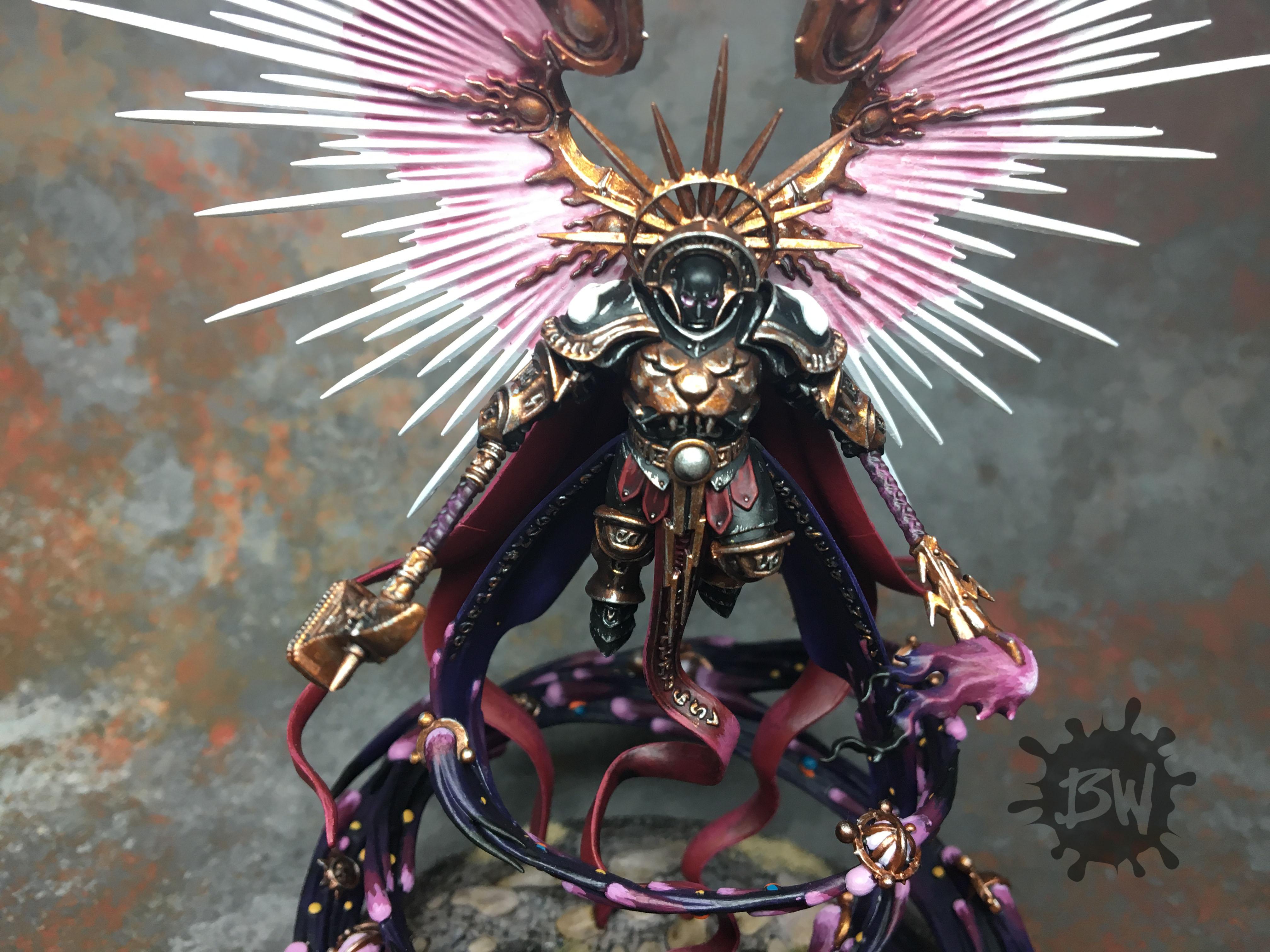
Phaeton the Morninglord, Rogue Space Angel

Frazzled Astral Lattice

Cocooning Space Elf

dinsdag 21 januari 2020

5E Domain Game

The players in my Sunset Realm campaign recently reached 10th level and have acquired some fame. They restored the flow of iron ore to the civilized lands and have gained the favor of nobles and kings.

Being a fan of strategic-level play and domain management, I crafted a homebrew set of domain game rules.

Note: Wyld and Temple ratings correspond directly to my Magic in the Sunset Realm rules, so consider that an optional rule.


Fiefs and Followers
Adventurers can opt to found a fief. A fief (domain, province) is a single 48-mile hexagon on the map, controlled by a character. Fiefs are ruled from a holding, either a keep, castle, tower or similar building. Fiefs can be either granted (by a king or lord), conquered, or cleared (in the case of an unclaimed wilderness hex). Fiefs can be held by more than one character, and many adventuring parties share a fief, each member establishing a holding within it.

Fiefs are statted as follows:

Level: an overall measure of population, development and prosperity. A fief’s level is the most important factor. A fief’s population can roughly be determined by squaring its level and multiplying it by 1,000. Most fiefs fall into the level 1-5 range. Only heavily developed areas exceed this range. There is no upper limit to the development of a fief.

Example: Antissa is a level 7 fief. It’s population can roughly be calculated as 7x7, multiplying by 1,000 for 42,000 citizens.

A fief’s level is important when factoring income, as outlined below.

Wyld: A fief’s Wyld rating is a rough measure of its raw arcane background power. The Wyld rating is determined by dominant terrain within a fief as follows:

Badlands/Desert – 3
Hills/Plains – 5
Light Forest – 7
Mountains – 7
Coast – 7
Heavy Forest – 8
High Mountains – 8
Marsh/Swamp – 8

For every level of development of a fief, the Wyld rating is lowered by 1 as the spread of civilization blocks the flow of arcane power through the land. The Wyld rating is directly translated into the maximum spell level that can be cast by bards, eldritch knights, arcane tricksters, sorcerers, warlocks and wizards within the fief.

Note: Elven settlements do not hamper the flow of arcane energy throughout the land. Their architecture allows the Wyld to flow unhindered.

Example: the harbor of Oronis lies near the coast. It is however a fief developed to level 3, lowering the Wyld rating of the area by the same amount. The Wyld rating of Oronis and surrounding area is therefore 4, allowing a maximum of level 4 spells to be cast by arcane spellcasters.
The domain of Arbor, within Arbor Forest, is a level 3 fief. But because it is a Wood Elven settlement, its development does not hamper the flow of arcane magic. Its Wyld rating thus remains 7.

Temple: A fief’s Temple rating is an abstraction of its religious devotion, measured in devoted souls, faithful congregations and religious buildings. A fief’s Temple rating can never be higher than its level. A fief’s Temple rating corresponds directly to the maximum level of spells that clerics, druids, paladins and rangers can cast.

Example: Antissa is home to the Celestial Mountain, a center for religious worship throughout the Alliance. It has invested heavily in religious institutions and boasts a devout population. Antissa’s Temple rating is 7, maximally developed, and therefore allows the casting of level 7 divine spells.

Contentment: An abstract measure of the population’s general attitude towards its rulers, contentment has three stages:

Friendly: the population is generally supportive of its government.
Indifferent: there are complaints, but at least the government is trusted to provide protection and vital services.
Hostile: there is widespread unrest, the population is one step short of open rebellion.

If contentment drops below Hostile, the fief is considered in open rebellion and provides no income or troops for its holder.

A fief’s contentment level can be influenced by the actions of its ruler(s). Charismatic rulers often have an easier time than uncharismatic ones to retain their population’s favor. Contentment can be increased by a month’s long campaign, requiring large amounts of money, public works or the staging of spectacles. Alternatively, the fief’s holder can quell the unrest by the deployment of troops. The ruler makes a Charisma check at the end of the month (modified for a particular skill, with a DC set by the DM based on the contribution made by the ruler). If the check is successful, contentment rises by one step.

Example: Aurora generally has an Indifferent attitude to its rulers, being a metropolis recently resettled with a frontier mentality. Recent events have spread unrest among the population, and its contentment has become Hostile. Aurora’s ruler, the Warforged known as the Primary, seeks to quell the unrest and institutes a strict regime of zero tolerance. After a month of cracking down on unrest, the Primary makes a Charisma (Intimidation) check to try and raise Aurora’s contentment back to Indifferent.


Fief income
All fiefs not in rebellion against their rulers provide income to their holders. At the end of a month, a fief’s holder can choose to levy tax on his fief. He can choose either light, moderate or heavy taxation. The severity of a levy determines the size of the dice to be rolled, the fief’s level determines the amount of dice rolled, 1 per level.

Light d4
Moderate d6
Heavy d12

The total rolled, multiplied by 100, is the amount of gold collected that month.

Levying moderate taxes reduces the fief’s Contentment one level. Levying heavy taxes reduces Contentment two stages. Choosing to forego taxation raises the fief’s Contentment level by one stage.

Example: Antissa, a level 7 fief, needs to pay for wartime expenses against marauding elves. King Kenneth levies a moderate tax, rolling 7d6 to determine income. He rolls a total of 27, thereby collecting 2,700 gp for the treasury but incurring the ire of the population. Antissa’s normally Friendly population becomes Indifferent.


Followers
Any adventurer with a holding in a fief that has reached 9th level in a single class attracts followers, as per the following table:

Barbarian 1d4+1 x10 tribal warriors
Bard 1 special (determined by DM), 1d6 scouts
Cleric 2d6 acolytes, 1d4+1 x10 guards
Druid 1 druid, 2d6 scouts
Fighter 2d6 veterans, 2d4+2 x10 guards
Monk 2d6 martial arts adeptsVGTM
Mystic 2d4 special (determined by DM)
Paladin 1 special (determined by DM), 2d4 knights
Ranger 1d4+1 x10 scouts
Rogue 2d6 spies
Sorcerer 2d6 apprentice wizardsVGTM
Warlock 1d3 special (determined by DM)
Wizard 2d6 apprentice wizardsVGTM

Followers require upkeep consisting of 2 gold pieces per day, in addition to lifestyle costs.

donderdag 16 januari 2020

5E Henchmen rules

I rather like the D&D Essentials Kit's take on Sidekicks. The Essentials Kit uses sidekick-rules to provide a way in which the game can be experiences one-on-one. But there is no limitation on a party of adventurers enlisting sidekicks.

In my Sunset Realm campaign, I use the Essentials sidekick rules as a modern interpretation of the old 1E/Basic Henchmen rules. For that to function, use the rules from the Essentials Kit on sidekicks (or the Unearthed Arcana version, for more variety) and consider the following:

All adventurers, being gifted with dangerous allure, are able to enlist Henchmen to their cause. Henchmen are confidantes, lieutenants, aides and apprentices. An adventurer can retain one henchman without penalty. Each additional henchmen brings a cumulative -2 penalty to Loyalty for all henchmen. The maximum number of henchmen an adventurer can retain is equal to 1+Charisma modifier (minimum 1). Henchmen are controlled by players, unless the DM intervenes or decides otherwise.

Henchmen come in three classes: Experts, Spellcasters and Warriors. Henchmen earn XP just as Player Characters do and level up just as PC’s do.

Retainer: Henchmen don’t join adventurers out of charity. They require attention from the PC they are loyal to, as well as a daily stipend of gold pieces equal to its level and lifestyle costs. To increase loyalty, PCs can choose to dole out shares of treasure gained from adventures.

Loyalty: A henchman’s loyalty is a score ranging from 1 to 20. A henchman’s maximum loyalty score is equal to the Charisma score of the retaining PC. Loyalty normally fluctuates by 1d4 up or down, according to the PC’s treatment of the henchman. If the PC helps the henchmen attain a goal related to its ideal or bond, loyalty increases by 1d4. If the PC works counter to the henchman’s bond or ideal, loyalty drops by 1d4. If the henchman is treated badly or dismissively by the retaining PC, loyalty drops by 2d4. If the Loyalty score reaches 0, the henchman abandons the PC. When loyalty is 10 or above, the henchman goes above and beyond the call of duty in service to the PC. Starting Loyalty is half the PC’s Charisma.

Example: Ferrek has a Charisma score of 15. The maximum loyalty of his henchman Pluck is therefore 15. When he hires Pluck, the henchman’s score is 7. Pluck’s ideal is freedom. Whenever Ferrek helps Pluck to feel free or free others, Pluck’s loyalty increases by 1d4, to a maximum of 15.

What do you think? Let me know in the comments!

maandag 6 januari 2020

Old-school style XP in D&D 5E

Beedo at Dreams in the Lich House has unleashed a debate on the XP-system of 5th Edition D&D. In his post, he riles against the Adventurer's League system of using milestone XP (and in my opinion, rightly so). But he considers 5th Edition's main system of earning XP via defeating foes in combat a fail also. And I agree.

Since stumbling on the OSR years ago, I have become enamored of old school play style, if not the systems. Whereas AD&D 2nd Edition brings fond memories to my brain, I have never blayed OD&D or any B/X variants. I thoroughly enjoy 5th Edition and, more importantly, my players do as well. But gaining XP only through combat is simplistic and promotes the wrong kind of problem-solving.

At my table, I expect my players to be clever, to avoid combat. I believe the XP-system of a game should reflect the in-game goals. Therefore, in my campaign, I award XP as follows:

Experience
Adventurers gain Experience Points (XP) by gathering forgotten treasures from dark dungeons. For every gold piece (gp) of value that an adventurers brings back to civilization he gains 1 XP. Experience is awarded when PC's return to their home base.

Adventurers also gain XP by committing the following acts:

- saving captured innocents from harm: XP value of defeated foe(s)
- defeating evil priests or sorcerers: XP value of defeated foe(s)
- disrupt vile rituals: XP value of defeated foe(s)
- killing aberrations or undead: XP value of defeated foe(s)
- eliminate conspiracies: XP value of defeated mastermind
- mapping the world: gp value of map in XP (125 gp/30 mile hex)
- mapping dungeons: gp value of map in XP (25 - 6600 gp)

Individual adventurers can gain XP by committing the following acts:

- win a duel: XP value of defeated foe
- end a personal vendetta: XP value of defeated foe
- providing a service for one's mentor: variable
- achieve a short term goal: 50 XP/level
- achieve a long term goal: 150 XP/level
- eliminate an obstacle to a personal goal: XP value of defeated obstacle/foewijderde obstakel

Inspiration
In addition to Experience, adventurers are awarded Inspiration for the following acts:

- accepting a duel
- taunt an enemy with words
- carousing
- a stylish move in combat
- a surprising moment in the game

This system is not perfect, but it reflects my personal preferences and promotes an old school, adventurous approach in the players.

What system for XP do you use?

maandag 2 december 2019

I made a thing!

The Trader Rogue Subclass has been altered and is now for sale on DM's Guild. It is my first officially published title on DM's Guild and I expect more to follow.

Get it here!

vrijdag 7 juni 2019

Races of ARCANA - part 2

Continuing from this earlier post, lore of the Player Character Races of ARCANA.

D&D, over its various editions, has always had a large cast of anthropomorphic animals: Gnolls, Sahuagin, Bugbears, Lizardfolk, Bullywug. In the past, with my interest firmly fixed on grimdark or sword & sorcery worldbuilding, I rarely found much use for these types of races, even as monstrous foes.

However, since Arcana is meant to be inspired by saturday morning cartoons and animalfolk inhabit the Western Kingdoms alongside Humans, Elves and Dwarves, the various anthropomorphic races in the Monster Manual and other sources can be reskinned as follows:

Aarakocra: These birdfolk can take the shape of various avian species, such as eagles or owls.
Bugbears: The bearfolk of Arcana are strong but can also be stealthy. They are as likely to take up axes and hammers in war, as they are innocent or adventurous.
Bullywugs: The frogfolk inhabit rivers, marshes and wetlands.
Giff: The hippofolk are a culture of distinguished and martial people, inhabiting southern regions.
Gnolls: These hyenafolk are often predatorial and carrion-eaters.
Kenku: The ravenfolk are a disctinct species of birdfolk, drawn to urban locations.
Kuo-Toa: The fishfolk of the seas are drawn to dark arts.
Lizardfolk: These savage reptilefolk live peaceful lives in swampy areas.
Loxodon: The elephantfolk of the distant South and East are rarely seen in the Western Kingdoms.
Minotaur: The bullfolk are strong and have a martial culture.
Neogi: These spiderfolk are feared throughout the Western Kingdoms as merchants of death and slavers.
Sahuagin: The sharkfolk of the seas and oceans, often at war with the fishfolk but possessed of an advanced culture.
Tabaxi: In most urban areas of the Western Kingdoms, these catfolk can be found.
Thri-Kreen: Relatively rare, these insectfolk mostly inhabit the deserts to the East.
Tortle: The turtlefolk lead mostly nomadic and lone lives.
Yuan-Ti: Heirs of an old empire, the snakefolk are oftentimes portrayed as evil.


Missing from this list are a few standard anthropomorphic animals:

Wolfmen
Foxfolk
Lionfolk
Rabbitfolk
Tigerfolk
Boarfolk
Dogfolk

Expect these races to appear in a future post.

maandag 3 juni 2019

The Siege of Antissa part 4 - The Forces Entrench Themselves

As weeks pass in my Sunset Realm game, the siege of Antissa, its freest city, continues.

To remind you, dear reader, of the situation: the High Elves of Silvanor Forest were driven out of their home cities of Benerel Nodel and Benerel Adon. For some reason, they hold humanity to blame and have therefore marched on the most nearby human capital: Antissa.

As they arrived and settled in, the King of Antissa, King Kenneth, sallied forth and claimed first blood.

Now, the siege has dragged on for another two weeks.

I have been using the War Machine rules to adjudicate the siege.

The Second Week
In the siege's second week, the Elves see their food supply diminished. They can only last this and next week and will have to force a decision in the fourth week of the siege. Antissa, meanwhile, still has enough food supplies for 65 weeks and can afford to sit out the Elves' attacks.

Still being outgunned by Antissa's siege defenses, the Elves choose to have another round of siege engine construction. Evander orders the construction of three trebuchets, further boosting the BR of his force by +36.

Kenneth, flush with his first victory, orders another round of harrassments. Rolling 1d100, Kenneth gets a result of 97, for a total of 267. Evander rolls 71 for a total of 231 - another win for Antissa. Looking up the difference in the Battle Results Table, a 36 gives the following:

Casualties: 2% for the Winner, 4% for the Loser
Fatigue: Moderate Fatigue for the Winner, Serious Fatigue for the Loser

As such, the Elves' active battle roster is reduced to 3,800 battle-ready elves and seriously fatigued. After 1 day (I rolled a 1 on 1d4), the Elves become moderately fatigued, which they remain for three days. After a week, the Elves are again restored to their normal strength.

Antissa's forces have been reduced from 6,100 to 5,980, all of whom are moderately fatigued. Two days later, their fatigue vanishes.

The Third Week
The Elves, seeing their food supplies dwindle, decide to bombard Antissa. Evander has four heavy catapults (+32) and three trebuchets (+36) for a total BR of 228. Antissa has a siege engine BR of 195.

When bombarding, the result of the week are determined by rolling 1d10 and multiplying the result by 10. That yields the number of hit dice as casualties as a percentage of the BR.

Evander rolls an 8, causing 80% of 228 = 182 civilian casualties.
King Kenneth rolls a 7, causing 70% of 195 = 136 elven casualties.

At the end of the third week of the siege, the Elves have suffered 236 casualties with another 100 wounded. The forces of Antissa have suffered 60 casualties with another 60 wounded, and another 136 civilian casualties.

Divine Intervention
High Ecclesiarch Terenas continues to pray for Divine Intervention during the second and third week of the siege. . His prayers are finally heard just three days before the end of the third week, after the first wave of bombardment has taken place. Bahamut, Terenas' patron deity, sends one of seven great gold dragons that serve him to negotiate a truce. Gruemar the Voice, a massive and ancient gold dragon, descends from the heavens amidst the Elven forces and negotiates for a peaceful end to the siege. The end-result of this negotiation has yet to be determined.


dinsdag 30 april 2019

Draconis Player Handout

So I've compiled a document for new players that enter the Draconis campaign. It's a sort of Setting Bible slash Player's Handout. And instead of listing dates and timelines and dreary histories, I've opted to show, not tell.

Curious yet?

Click ye here.

woensdag 24 april 2019

The (Walking) Red Dead

The Red Death originating out of Aurora quickly spread to the surrounding, prosperous cities of the south. Those infected with the plague who managed to travel from Aurora to its neighboring settlements spread the infection. In a matter of months, the southlands as well as the heartlands of the Empire of Draconis were overrun with walking dead.

When infected, a victim of the Scarlet Plague suffers from a sickening fever. Within hours, the victim dies of the infection. A victim's skin turns unnaturally red (hence the name of the disease). A short time later, which can be minutes or hours, the deceased victim reopens its eyes, now shining with a crimson light, to spread the infection further.


RED DEAD
Medium humanoid (undead), unaligned

Armor Class 8
Hit Points 9 (2d8)
Speed 20 ft.

STR     DEX     CON     INT  WIS  CHA
11 (+0) 6 (-2)    10 (+0)  7 (-2) 8 (-1) 6 (-2)

Damage Immunities necrotic; bludgeoning, piercing and slashing damage from nonmagical weapons
Condition Immunities poisoned
Senses darkvision 60 ft., passive perception 9
Languages understands the languages it spoke in life but can't speak
Challenge 1/2 (100 XP)

Strength in Numbers. The Red Dead has advantage on attack rolls when adjacent to another Red Dead.

ACTIONS
Grapple. Melee Weapon Attack: +2 to hit, contested by the targets Strength (Athletics) or Dexterity (Acrobatics) check. Target is grappled if attack succeeds. The target can escape the grapple on its turn by succeeding another contested check.
Bite. Melee Weapon Attack: +2 to hit, reach 5ft., one creature. Hit: 4 (1d6) piercing damage. The target contracts the Red Death. Every hour, the target must succeed on a DC 10 Constitution save or suffer one level of exhaustion. The Red Death can only be cured by magical means such as Lesser Restoration or Remove Curse. A victim dying of the Red Death rises 1d4 hours later as a Red Dead.

ENVIRONMENT
All

maandag 22 april 2019

A Trader subclass for 5E

In the deserts of Athas, the setting of Dark Sun, great merchant houses ferry the goods needed to survive from city to city. The characters that serve a key purpose in these merchant houses are the Dune Traders. 

In the post-fall wilderness of Draconis, trading goods between communities has become essential to survival. In the Plaguelands, the powerful faction known as The Guild is only just now emerging on the forefront. With a strong presence in Trade Town, the Guild is a key organization in the supply, survival and travel needs of the communities of the Plaguelands. With dozens of thieves, assassins and vagabonds in its employ, it is also a network of less reputable individuals. None are so valued however as the Traders


TRADER is an archetype for the 5th Edition Rogue class. Traders are rogues that specialize in merchandise, profit, social contacts and negotiation. Without Traders, the economy of the post-apocalyptic wilderness communities would quickly collapse. They provide a strong network of tightening economic dependency between the communities. As a Trader, you quickly grow into an economic linchpin of your party.

Bonus Proficiencies
At 3rd level, you gain proficiency in two skills or artisan's tools of the following list: Deception, Insight, Intimidation, Persuasion and Calligrapher's Supplies, Cartographer's Tools or Jeweler's Tools.

Fast Talk
At 3rd level, you gain the ability as a bonus action on your turn, to make a Charisma (Persuasion) or (Deception) check, opposed by the target's Wisdom (Insight) to talk your way out of sticky situations. You can use your fast talk in bargaining situations or to gain advantage on your next attack roll.

Trade Tongue
At 9th level, you learn two additional languages. You are implied to have learned these languages in your career as a trader. They can be common as well as exotic languages.

Exceptional Contact
During your adventures, you have made contacts with various communities and organizations. At 13th level, one of these contacts - either a warlord or guild leader or community leader - develops into an exceptionally strong ally. At any time, you can invoke this ally's aid in a situation. For all intents and purposes, the ally acts as if under the influence of Charm Person

Leverage
At 17th level, your contacts, trading partners, personal standing and credit and personal wealth are such that you can immediately procure any service (including spellcasting services, as per the PHB's chapter on Equipment) you want. In addition, you can maintain an aristocratic lifestyle at no cost and suffer no expense for food, drink and lodging.


vrijdag 19 april 2019

Plaguelands Map

The Keep sits square in the middle of the area called "The Plaguelands", a region swarming with Red Dead.


1 Hex = 6 miles

maandag 15 april 2019

The Defiance of the Dragons and the Red Death

Continuing the history of Draconis

The Empire of the Dragonlords did not last. Reigning from Dragonback out of Aurora, the realm of Draconis prospered. But with the settlement and development of the continent, the land's natural magic was diminished. In time, Aurora's lords and wizards grew entirely dependent on their Dragon allies and the mineral known as Bloodstone.

Natural Bloodstone deposits amplify the flow of magic around them but when mined, the mineral can be forged into Bloodsteel, the key material of magical armor, weapons, and wondrous items. The armies of Draconis came to depend on their Bloodsteel equipment and the mined Bloodstone was used as the foundation of magical knowledge throughout the realm.

The advance of civilization and its accompanying disruption of the natural flow of magic, as well as the ruthless mining and exploitation of Bloodstone came to anger the Dragons. A rift grew between the humans of Aurora and the Dragons, culminating in what scholars now term "The Defiance of the Dragons".

Within one week, all Dragons on Draconis left their human companions and went into hiding in places unknown. High-level magical research ground to a halt and many of the realm's more advanced spells failed. Aurora's most gifted arcane talent, a man known as Aenarys, sought a way to continue the magical advancement of the Empire and he turned his research to Bloodstone.

For years Aenarys toiled in his laboratories. Researching draconic lore and experimenting with Bloodstone. On one fateful day, however, his experiments backfired and a crimson mist rose up from his arcane spire. Within minutes, the entire holy city of Aurora was blanketed in the red haze. Victims exposed to the mist died within moments. Only those strongest of will or body were able to escape its grasp. Those that died from inhaling the crimson vapor rose again as ghouls, their skin taking on a red hue and their eyes shining with an unnatural red light.

The mist slowly dispersed throughout the realm. The malady that gripped Draconis came to be known as the Red Death as thousands died and rose again as red-eyed, red-hued ghouls. The southern cities were the first to fall. Over the course of three years, the Red Death spread across the continent. Major population centers were depopulated and evacuated. The only respite came from the Church, whose clerics and paladins were able to turn and destroy the undead. Towns and cities where the Church was strongest were able to hold out untill the plague had run its course. Population centers without powerful priests were doomed. Many people fled into the countryside and organized themselves into warbands.

A generation has passed since the Red Death. Aurora has become an abandoned husk. The Empire of Draconis has fallen. Many cities are battlefields between the undead and the living. The wilderness teems with warbands and lawless rovers. Here and there, palisaded communities of survivors led by priests or warlords eke out a living in the countryside.

Amidst all this anarchy, rumours circulate that the Dragons have returned...

vrijdag 12 april 2019

Empire of the Dragonlords

From the history books of the Loremasters of Draconis:

It is no secret that the ancient tribes of Mankind learned the ways of magic from otherworldly beings. Under the guidance of the Eldar, the Men of Aurora prospered. Great towers and palaces were raised unto the skies, shaped by the magic power of the land. The Eldar were wise in the ways of magic and arcane knowledge, including the mightiest of spells, was at its height in those early days of Empire.

Men being men, however, desired ever greater power. And even the mightiest of spells, of the ninth and tenth grade, were not enough to satisfy these desires. So men sought out the original sorcerers of the Earth - the Dragons.

Over decades, the wizard-lords of the Empire fought and subjugated the mighty Dragons. Eventually, an accord was reached by the more orderly Dragons and the wizard-lords of the Realm. The Empire of Draconis entered a new phase of expansion as Man and Dragon entered into an arcane alliance.

The Eldar, seeing their strict teachings disregarded and forgotten, fought against these Dragonlords but to no avail. The power of the Eldar was broken and the Dragonlords reigned supreme. The Dragonmen, children of the Dragons, established themselves within the borders of Mankind. The Empire of Draconis expanded to encompass the entire continent. Expeditions on dragonback established footholds on the eastern continent of the Enlightened, as well as on the continent to the south, the ancestral birthplace of Mankind.

The Eldar, broken and on the run, fled into the forests and glades, the hidden and secret places of the Earth. There, those that still upheld the arcane mysteries developed as the High Elves. The Eldar that abandoned the magical ways and embraced their lives in the wilderness became Wood Elves.

The Empire of Draconis, with Aurora as its capital, grew and prospered for centuries. But without the guidance of the Elves, Man's cities choked and blocked the natural flow of magic across the land. The Men of Aurora grew dependent solely on their bond with the Dragons, their magical knowledge slowly fading. As long as that bond lasted, the Empire thrived. But that bond, as all things, came to an end - as did the Empire.

donderdag 11 april 2019

The Siege of Antissa part 3 - Opening Moves

Prince Evander, his nephew Prince Leolar and the Duchess Ylsandre have drawn up their forces outside of the City of Antissa, capital of the Alliance, demanding forceful entrance. Inside of Antissa's walls, King Kenneth has shored up his defenses. Thousands of citizen-soldiers stand ready to defend their home. At the start of the first week of the siege, each party's actions are as follows:

Antissa (BR 170)
Though Antissa is a large city, high-level wizards and sorcerers are rare. Only 1 in 128.000 attains that level and Antissa's archmage Tenser is missing. The city is therefore unable to teleport in food at the moment. The city does have access to the priests of the Celestial Mountain, five of whom are able to provide food daily to a total of 75 people. In addition, High Ecclesiarch Terenas Vayder is able to provide for 120 people each day and will pray for Divine Intervention from Bahamut. Antissa has prepared six months of food for storage (7,2 million units) and Kenneth immediately rations that to food once per 3 days for commoners. Soldiers get a full allotment each day. Water can be supplied from the springs beneath the Celestial Mountain. In total, Antissa loses 108,600 food units each week. At this rate, Kenneth can hold Antissa for 66 weeks - more than a year!

In terms of siege actions, Kenneth chooses to Harras the Elven forces.

High Elves (BR 160)
The Elves have just arrived on the field of battle, without siege engines and with only meager supplies. They currently have enough food to feed their numbers for two weeks. In their first day, the Elves scour the countryside to extend their stores for an additional week. During the rest of the week, four heavy catapults (+8 BR) are constructed.

The first week of the siege
Though Terenas prays for Divine Intervention each wake, his prayers go unanswered.
Kenneth's harrasment of Evander's forces results in the first skirmish of the siege. Kenneth rolls a 19 on a d100 for a total Battle Result of 170+19 = 189. Evander rolls a 25 for a total of 185. Kenneth has caught the Elves while they were still settling in!

But his succes is only marginal. 20 Elves are killed, another 20 wounded. 3,960 battle-ready Elves, under the command of three formidable spellcasters, still remain...


maandag 8 april 2019

The Siege of Antissa part 2 - Defenses and Siege Engines

Basic D&D's War Machine had an addendum rules set called Siege Machine, developed specially for sieges. Using the Siege Machine rules, we will further chart the course of the Siege of Antissa.

Defenses
Antissa is an old city-state and has survived multiple extended wars, magical conflicts and even divine intervention. Its defenses are formidable and consist of the following:

- 4 cannons* +12 BR
- 3 trebuchets +12 BR
- 8 ballistas +2 BR
- in stronghold +50 BR

Each weapon has enough ammunition for a year's worth. King Kenneth is not a risk taker.

Furthermore, Antissa's army outnumbers Silvanor's army 1,5 to 1, yielding an additional +15 BR. Furthermore, Antissa is defending its own domain and receives a +10 BR for morale.

*In the original Siege Machine rules, cannons were not listed. In my campaign, cannons are very real. Comparing the 5E statistics on page 255 of the DMG yields the cannon as dealing the same amount of damage as a trbuchet. In Siege Machine, a trebuchet gives a +12 BR, therefore, the cannons give a +12 BR each.

Elven siege equipment
The High Elves of Silvanor are only fresh out of a home and have hurried to their former-ally. In their hurry, the forces of Evander have not yet been able to construct siege engines.
The Elves additionally receive a +10 bonus for their superior quality against Antissa's citizen army.


Final Notes
As Prince Evander arrives at Antissa's gates, the Battle Ratings of both forces stand as follows:

Antissa: 170
Silvanor: 160