woensdag 25 maart 2020

The Cosmic Flail Snail


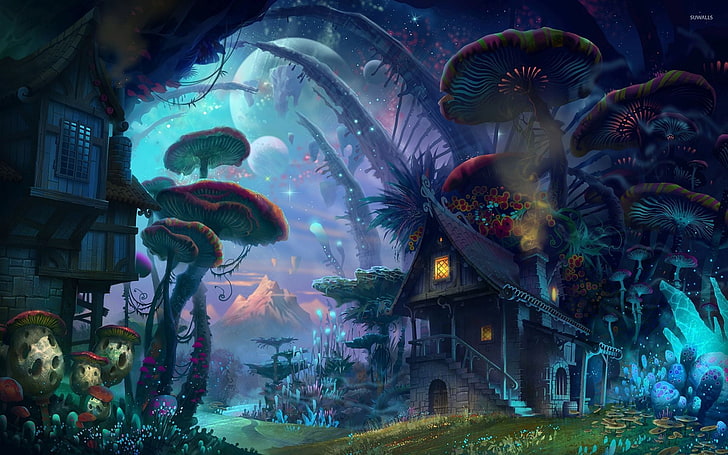
It is known for a fact that the Westerrealm is borne through the sea of stars on the back of the great Cosmic Flail Snail. Eternally crawling across the celestial void, leaving a trail of slimy cosmic truths in its wake, Great Gary (for that is the name given to the Cosmic Flail Snail by theologians and philosophers) knows what lies in store for the world. Attempts to divine this great prophecy from the mind of Great Gary by the use of snail-derived psychotropic drugs have so far failed.


Great Gary, the World-Bearing Cosmic Flail Snail (image by Jeff Rients)

dinsdag 24 maart 2020

Welcome to the Weird

This clicked into my head yesterday, as a setting idea for my Western Oerik setting, and a radical departure of Sword 'n' Sorcery-style standard fantasy settings:


From the North, vicious Snow Goons and their ghoul hordes threaten existence. From the South, the Celestial, Phaeton the Morninglord stretches forth his luminous hands to increase his writ. The Westerrealm is caught in the middle of this historic clash of forces, while princes, kings and priests vie for ideological supremacy in an attempt to change the discourse. Power-mad wizards and zealous clerics frazzle the threads of the Astral lattice that drapes the Westerrealm in splendor, awakening petty godlings long thought gone and stirring the elder Space Elves from their cocooning slumber.

Welcome to the Westerrealm, welcome to the Weird.


(Liberally inspired by Chris Kutalik's Hill Cantons and Trey Causey's Land of Azurth.)

Snow Goons

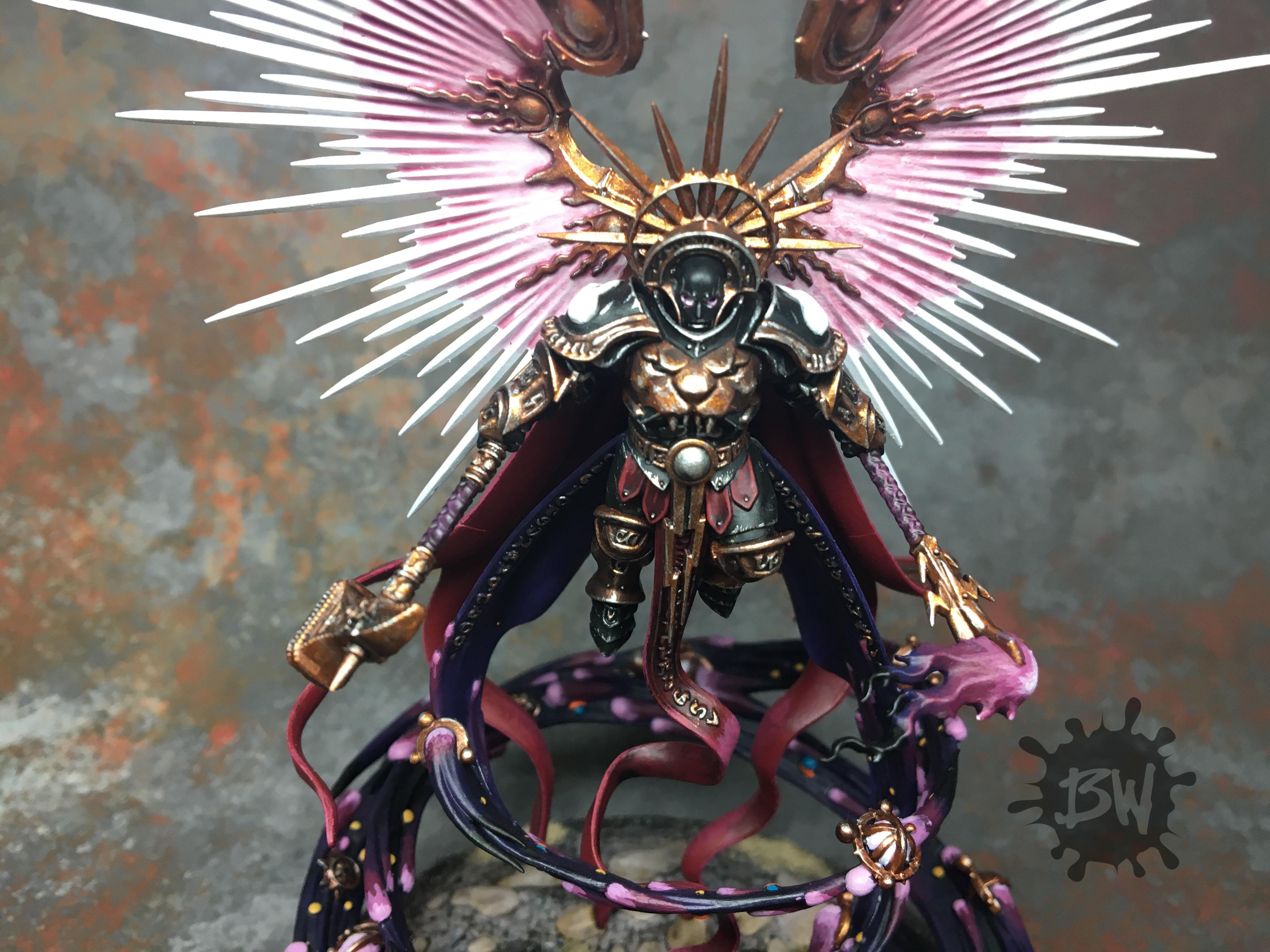
Phaeton the Morninglord, Rogue Space Angel

Frazzled Astral Lattice

Cocooning Space Elf

zondag 23 februari 2020

Mordenkainen, Rary and Tenser

An interesting question came up on Canonfire. Why would Mordenkainen allow Rary to continue to consolidate his Empire of the Bright Lands without interference?

To recap: in the World of Greyhawk, Mordenkainen is the leader of the Circle of Eight, a group of wizard Illuminati. They pull the magical and political strings behind the scenes in order to preserve a balance of power across the continent of The Flanaess, ensuring neither the forces of Good nor Evil gain the upper hand. Mordenkainen himself, furthermore, holds to an arcane philosophy known as the Balance, a True Neutral view of the cosmos in which, in order for magic to flow unhindered, a balance must exist between the metaphysical forces that make up the multiverse (see also Mordenkainen's Tome of Foes or my own thoughts on the matter). Rary and Tenser are both former members of the Circle, Rary having betrayed the Circle and murdered Tenser. After Rary's betrayal, he fled to the Bright Desert south of the City of Greyhawk to set up his own domain. Tenser meanwhile, was brought back to life by a party of adventurers to pursue the cause of Good.

So the three wizards no longer hold allegiance to one another, one is devoted to Good, one to Evil, one to Neutrality. Why is it that there is no great magical battle between two or even all three wizards?

The answer, I guess, lies in motive. Mordenkainen is a powerful archmage but not as powerful as Rary, who has always been described as surpassing Mordenkainen in arcane might. Sure, Mordenkainen can manipulate events and entire adventuring parties to oppose Rary, but for the moment, Rary serves his purposes. In Rary the Traitor, is is stated that the self-styled Emperor of the Bright Lands seeks to find an artifact known as the Scorpion Crown. Later in the Living Greyhawk-campaign, this becomes an entire quest-line. Rary seeks to find the Crown in order to destroy it and return the Bright Desert to a green land. Furthermore, the Crown is a link to the Dark God Tharizdun, who seeks to unravel magic and unmake the multiverse - a goal that Mordenkainen opposes. Finding and destroying the Scorpion Crown weakens Tharizdun's links to Oerth. Therefore, Mordenkainen allows Rary to pursue these ends.

Tenser, meanwhile, knows that Rary is more powerful and better supported than he is. Rary controls various desert tribes and Paynim nomads. He prefers to work through underlings, like his paladin ally Karistyne. In the adventure arc "Blight on Bright Sands", he does just that - let Karistyne hire adventurers to oppose Rary and destroy the means to unmake the Scorpion Crown.

It is interesting to consider the implications of three archmages playing a game of cosmic, arcane chess against each other and with what motives and what this means for adventures in the World of Greyhawk.


dinsdag 21 januari 2020

5E Domain Game

The players in my Sunset Realm campaign recently reached 10th level and have acquired some fame. They restored the flow of iron ore to the civilized lands and have gained the favor of nobles and kings.

Being a fan of strategic-level play and domain management, I crafted a homebrew set of domain game rules.

Note: Wyld and Temple ratings correspond directly to my Magic in the Sunset Realm rules, so consider that an optional rule.


Fiefs and Followers
Adventurers can opt to found a fief. A fief (domain, province) is a single 48-mile hexagon on the map, controlled by a character. Fiefs are ruled from a holding, either a keep, castle, tower or similar building. Fiefs can be either granted (by a king or lord), conquered, or cleared (in the case of an unclaimed wilderness hex). Fiefs can be held by more than one character, and many adventuring parties share a fief, each member establishing a holding within it.

Fiefs are statted as follows:

Level: an overall measure of population, development and prosperity. A fief’s level is the most important factor. A fief’s population can roughly be determined by squaring its level and multiplying it by 1,000. Most fiefs fall into the level 1-5 range. Only heavily developed areas exceed this range. There is no upper limit to the development of a fief.

Example: Antissa is a level 7 fief. It’s population can roughly be calculated as 7x7, multiplying by 1,000 for 42,000 citizens.

A fief’s level is important when factoring income, as outlined below.

Wyld: A fief’s Wyld rating is a rough measure of its raw arcane background power. The Wyld rating is determined by dominant terrain within a fief as follows:

Badlands/Desert – 3
Hills/Plains – 5
Light Forest – 7
Mountains – 7
Coast – 7
Heavy Forest – 8
High Mountains – 8
Marsh/Swamp – 8

For every level of development of a fief, the Wyld rating is lowered by 1 as the spread of civilization blocks the flow of arcane power through the land. The Wyld rating is directly translated into the maximum spell level that can be cast by bards, eldritch knights, arcane tricksters, sorcerers, warlocks and wizards within the fief.

Note: Elven settlements do not hamper the flow of arcane energy throughout the land. Their architecture allows the Wyld to flow unhindered.

Example: the harbor of Oronis lies near the coast. It is however a fief developed to level 3, lowering the Wyld rating of the area by the same amount. The Wyld rating of Oronis and surrounding area is therefore 4, allowing a maximum of level 4 spells to be cast by arcane spellcasters.
The domain of Arbor, within Arbor Forest, is a level 3 fief. But because it is a Wood Elven settlement, its development does not hamper the flow of arcane magic. Its Wyld rating thus remains 7.

Temple: A fief’s Temple rating is an abstraction of its religious devotion, measured in devoted souls, faithful congregations and religious buildings. A fief’s Temple rating can never be higher than its level. A fief’s Temple rating corresponds directly to the maximum level of spells that clerics, druids, paladins and rangers can cast.

Example: Antissa is home to the Celestial Mountain, a center for religious worship throughout the Alliance. It has invested heavily in religious institutions and boasts a devout population. Antissa’s Temple rating is 7, maximally developed, and therefore allows the casting of level 7 divine spells.

Contentment: An abstract measure of the population’s general attitude towards its rulers, contentment has three stages:

Friendly: the population is generally supportive of its government.
Indifferent: there are complaints, but at least the government is trusted to provide protection and vital services.
Hostile: there is widespread unrest, the population is one step short of open rebellion.

If contentment drops below Hostile, the fief is considered in open rebellion and provides no income or troops for its holder.

A fief’s contentment level can be influenced by the actions of its ruler(s). Charismatic rulers often have an easier time than uncharismatic ones to retain their population’s favor. Contentment can be increased by a month’s long campaign, requiring large amounts of money, public works or the staging of spectacles. Alternatively, the fief’s holder can quell the unrest by the deployment of troops. The ruler makes a Charisma check at the end of the month (modified for a particular skill, with a DC set by the DM based on the contribution made by the ruler). If the check is successful, contentment rises by one step.

Example: Aurora generally has an Indifferent attitude to its rulers, being a metropolis recently resettled with a frontier mentality. Recent events have spread unrest among the population, and its contentment has become Hostile. Aurora’s ruler, the Warforged known as the Primary, seeks to quell the unrest and institutes a strict regime of zero tolerance. After a month of cracking down on unrest, the Primary makes a Charisma (Intimidation) check to try and raise Aurora’s contentment back to Indifferent.


Fief income
All fiefs not in rebellion against their rulers provide income to their holders. At the end of a month, a fief’s holder can choose to levy tax on his fief. He can choose either light, moderate or heavy taxation. The severity of a levy determines the size of the dice to be rolled, the fief’s level determines the amount of dice rolled, 1 per level.

Light d4
Moderate d6
Heavy d12

The total rolled, multiplied by 100, is the amount of gold collected that month.

Levying moderate taxes reduces the fief’s Contentment one level. Levying heavy taxes reduces Contentment two stages. Choosing to forego taxation raises the fief’s Contentment level by one stage.

Example: Antissa, a level 7 fief, needs to pay for wartime expenses against marauding elves. King Kenneth levies a moderate tax, rolling 7d6 to determine income. He rolls a total of 27, thereby collecting 2,700 gp for the treasury but incurring the ire of the population. Antissa’s normally Friendly population becomes Indifferent.

 
Followers
Any adventurer with a holding in a fief that has reached 9th level in a single class attracts followers, as per the following table:

Barbarian 1d4+1 x10 tribal warriors
Bard 1 special (determined by DM), 1d6 scouts
Cleric 2d6 acolytes, 1d4+1 x10 guards
Druid 1 druid, 2d6 scouts
Fighter 2d6 veterans, 2d4+2 x10 guards
Monk 2d6 martial arts adeptsVGTM
Mystic 2d4 special (determined by DM)
Paladin 1 special (determined by DM), 2d4 knights
Ranger 1d4+1 x10 scouts
Rogue 2d6 spies
Sorcerer 2d6 apprentice wizardsVGTM
Warlock 1d3 special (determined by DM)
Wizard 2d6 apprentice wizardsVGTM

Followers require upkeep consisting of 2 gold pieces per day, in addition to lifestyle costs.

donderdag 16 januari 2020

5E Henchmen rules

I rather like the D&D Essentials Kit's take on Sidekicks. The Essentials Kit uses sidekick-rules to provide a way in which the game can be experiences one-on-one. But there is no limitation on a party of adventurers enlisting sidekicks.

In my Sunset Realm campaign, I use the Essentials sidekick rules as a modern interpretation of the old 1E/Basic Henchmen rules. For that to function, use the rules from the Essentials Kit on sidekicks (or the Unearthed Arcana version, for more variety) and consider the following:

All adventurers, being gifted with dangerous allure, are able to enlist Henchmen to their cause. Henchmen are confidantes, lieutenants, aides and apprentices. An adventurer can retain one henchman without penalty. Each additional henchmen brings a cumulative -2 penalty to Loyalty for all henchmen. The maximum number of henchmen an adventurer can retain is equal to 1+Charisma modifier (minimum 1). Henchmen are controlled by players, unless the DM intervenes or decides otherwise.

Henchmen come in three classes: Experts, Spellcasters and Warriors. Henchmen earn XP just as Player Characters do and level up just as PC’s do.

Retainer: Henchmen don’t join adventurers out of charity. They require attention from the PC they are loyal to, as well as a daily stipend of gold pieces equal to its level and lifestyle costs. To increase loyalty, PCs can choose to dole out shares of treasure gained from adventures.

Loyalty: A henchman’s loyalty is a score ranging from 1 to 20. A henchman’s maximum loyalty score is equal to the Charisma score of the retaining PC. Loyalty normally fluctuates by 1d4 up or down, according to the PC’s treatment of the henchman. If the PC helps the henchmen attain a goal related to its ideal or bond, loyalty increases by 1d4. If the PC works counter to the henchman’s bond or ideal, loyalty drops by 1d4. If the henchman is treated badly or dismissively by the retaining PC, loyalty drops by 2d4. If the Loyalty score reaches 0, the henchman abandons the PC. When loyalty is 10 or above, the henchman goes above and beyond the call of duty in service to the PC. Starting Loyalty is half the PC’s Charisma.

Example: Ferrek has a Charisma score of 15. The maximum loyalty of his henchman Pluck is therefore 15. When he hires Pluck, the henchman’s score is 7. Pluck’s ideal is freedom. Whenever Ferrek helps Pluck to feel free or free others, Pluck’s loyalty increases by 1d4, to a maximum of 15.

What do you think? Let me know in the comments!

maandag 6 januari 2020

Old-school style XP in D&D 5E

Beedo at Dreams in the Lich House has unleashed a debate on the XP-system of 5th Edition D&D. In his post, he riles against the Adventurer's League system of using milestone XP (and in my opinion, rightly so). But he considers 5th Edition's main system of earning XP via defeating foes in combat a fail also. And I agree.

Since stumbling on the OSR years ago, I have become enamored of old school play style, if not the systems. Whereas AD&D 2nd Edition brings fond memories to my brain, I have never blayed OD&D or any B/X variants. I thoroughly enjoy 5th Edition and, more importantly, my players do as well. But gaining XP only through combat is simplistic and promotes the wrong kind of problem-solving.

At my table, I expect my players to be clever, to avoid combat. I believe the XP-system of a game should reflect the in-game goals. Therefore, in my campaign, I award XP as follows:

Experience
Adventurers gain Experience Points (XP) by gathering forgotten treasures from dark dungeons. For every gold piece (gp) of value that an adventurers brings back to civilization he gains 1 XP. Experience is awarded when PC's return to their home base.

Adventurers also gain XP by committing the following acts:

- saving captured innocents from harm: XP value of defeated foe(s)
- defeating evil priests or sorcerers: XP value of defeated foe(s)
- disrupt vile rituals: XP value of defeated foe(s)
- killing aberrations or undead: XP value of defeated foe(s)
- eliminate conspiracies: XP value of defeated mastermind
- mapping the world: gp value of map in XP (125 gp/30 mile hex)
- mapping dungeons: gp value of map in XP (25 - 6600 gp)

Individual adventurers can gain XP by committing the following acts:

- win a duel: XP value of defeated foe
- end a personal vendetta: XP value of defeated foe
- providing a service for one's mentor: variable
- achieve a short term goal: 50 XP/level
- achieve a long term goal: 150 XP/level
- eliminate an obstacle to a personal goal: XP value of defeated obstacle/foewijderde obstakel

Inspiration
In addition to Experience, adventurers are awarded Inspiration for the following acts:

- accepting a duel
- taunt an enemy with words
- carousing
- a stylish move in combat
- a surprising moment in the game

This system is not perfect, but it reflects my personal preferences and promotes an old school, adventurous approach in the players.

What system for XP do you use?

zondag 5 januari 2020

And now for the News from the Sunset Realm

The Sands Are Alive With The Living Dead!
All over the Zaar, the dead have been returning to life. Corpses both fresh and old have started to traipse about since a few weeks. The source of this mysterious reanimation as yet remains unknown.

A change of course at the Cartographer's Guild
It has come to light that the chief cartographer at the Cartographer's Guild has not been doing a good job. His charts are a mess and increasing mismanagement of guild members has irked the ire of traders, generals and adventurers alike. A new head cartographer has been instated and he has immediately set out to correct his forebear's mistakes.

Infestation at Ironguard eradicated
In the turn of a moon, a hardy party of adventurers has cleared the infested depths of Ironguard from all manner of monstrous vermin. Aberrations, fiends and iron-eating monstrosities were reported to have inhabited the depths, blocking the flow of iron from the realm's major source. A mountain dwarf by name of Ferrek Hammerhold has claimed the mountain and has promised to resume the production of iron on short notice.